

What Rhodes, Kos and Kalymnos Reveal About Island Governance
In recent months, the Dodecanese has witnessed a series of events that may appear unrelated when viewed in isolation. Yet when considered together, they reveal a broader pattern — one that raises important questions about the exercise of power and the role reserved for local communities within decision-making processes.
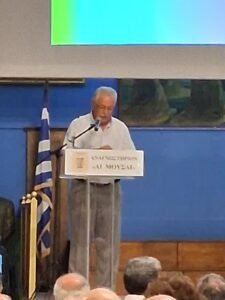
In Rhodes, the island’s elected Mayor and President of the South Aegean Regional Union of Municipalities publicly complained that he was denied the opportunity to deliver an institutional address during an official event organized by the Ministry of Culture.
In Kalymnos, the local community continues its long-standing effort to secure the return of cultural artifacts that form part of the island’s historical identity, while many residents feel that their voice is not receiving the attention and response it deserves.
In Kos, a public call was issued for the lease of the retail space at the Defterdar Mosque, allowing only five days for applications and including conditions that reasonably raise questions about the extent to which local businesses can realistically participate.
Each of these cases has its own distinct characteristics. Yet all of them converge at a common point.
They reflect a perception that local communities are expected to adapt to decisions that have already been made, rather than participate meaningfully in shaping them.
They reflect a perception that disagreement creates discomfort and that criticism is treated as a problem to be managed rather than a contribution to democratic dialogue.
They reflect a perception that culture is regarded as an exclusive field of central authority, rather than a space for cooperation with the communities that preserve, live with, and give meaning to cultural heritage.
And yet, monuments and cultural assets are not merely administrative objects. They are part of the identity, history and collective memory of our islands.
Rhodes, Kos and Kalymnos have found themselves at the center of different controversies. Nevertheless, they all highlight the same demand: greater respect for island communities, greater trust in their institutions, and greater participation in decisions that affect their present and future.
Because island policy is ultimately measured in practice. It is measured by the way the State listens, cooperates and co-shapes the future together with the people of the islands.
Katerina Gavala
Deputy Secretary for Island Policy
Member of the Central Political Committee
PASOK – Movement for Change