

Kyriakos Berberidis
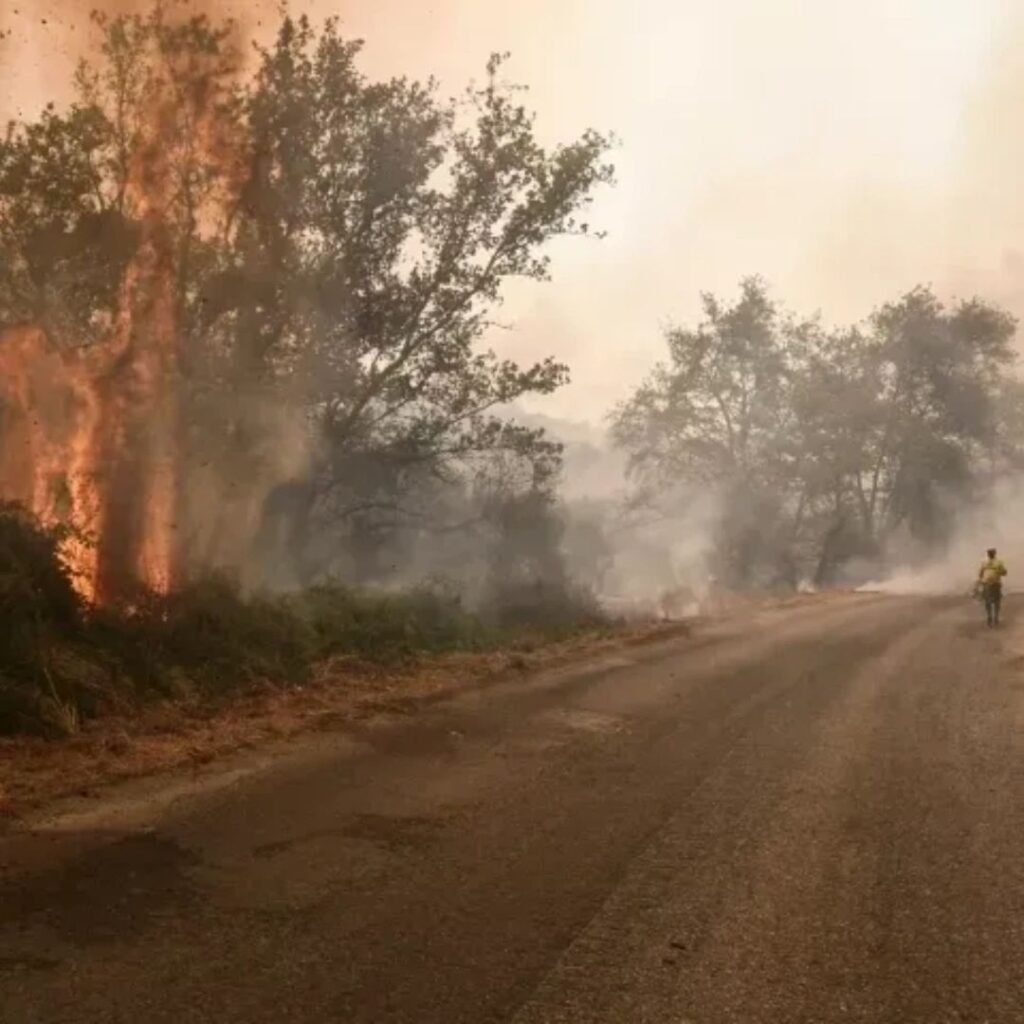
Achaia was severely tested by the recent devastating fires that burned everything in their path and nearly reached the center of Patras.
The image the next day was heartbreaking. Thousands of acres turned to ashes, houses burned, properties were lost, animals died in agony.
The fortunate thing was that at least we had no human losses.
Two individuals were arrested as prime arson suspects: a 17-year-old who confessed, and a 25-year-old described as an “anarchist,” who claimed he “didn’t remember what happened because he had been drinking tsipouro.” Nevertheless, the evidence against them is overwhelming and leaves no room for doubt.
Yet, there were still people who considered these acts almost praiseworthy.
“Bravo, my lad,” shouted supporters to the 25-year-old detainee as he was brought before the prosecutor.
The same man was applauded as he exited, as if he had performed some heroic feat. A sickening sight that in other times would have been unthinkable, but today is seen by some as almost normal.
A not insignificant segment of society insists on viewing delinquency as a quasi-act of “resistance” against the “system.”
A “system” which, for reasons beyond rational explanation, some consider inherently dark, suspicious, and abhorrent—always plotting harmful policies against the people, whom for mysterious reasons it supposedly wants to destroy.
Vandalism of buildings and road signs, occupations and destruction in schools and universities, even sabotage of infrastructure, remain part of the daily agenda—all symptoms of the same disease.
And one wonders what kind of underground social processes took place in recent years that led to such alienation.
The state’s timidity and years of impunity certainly played a crucial role. The apathy of society was another.
But the root cause must be sought 50 years back, in the early Metapolitefsi (post-junta era).
When, after the dictatorship, democracy was restored, but the pendulum of history swung left, leading to excesses. This was, to a point, expected, since after seven years of oppression, accumulated anger had to find an outlet.
Similar things happened elsewhere too, like in Spain and Portugal—countries that endured dictatorships for far longer than us.
The difference, however, was that their societies showed maturity. And things balanced relatively quickly.
Unlike us, still struggling with our demons.
Thus, we find it perfectly logical to believe that “the junta didn’t end in ’73,” that Koufodinas was a “fighter,” and that arsonists are “heroes.”
Get well soon, Greece.