
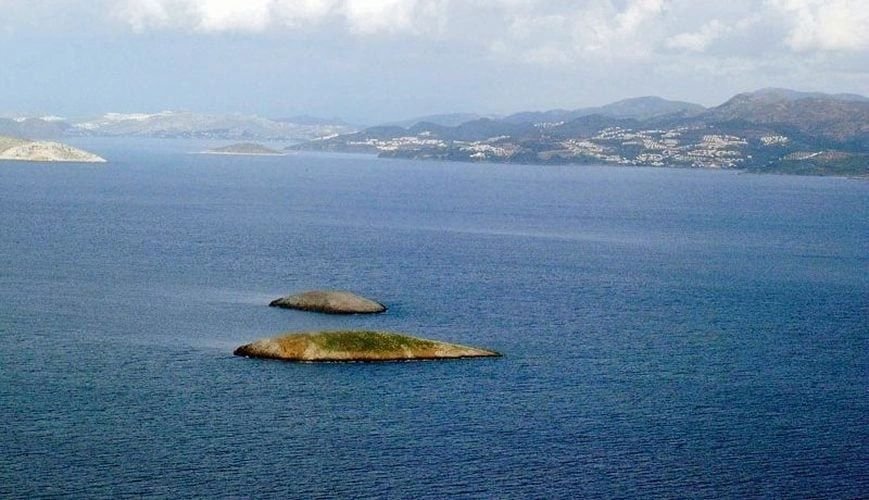
As unlikely as it may seem, a dispute over salvage rights between Turkish and Greek captains was the trigger for a series of events which escalated into a major international incident called the Imia Crisis.
The quickly-spiraling crisis saw the deployment of both countries’ special forces, the involvement of the United States, and the tragic loss of three Greek officers.
On December 26, 1995, the Turkish cargo vessel Figen Akat ran aground on the easternmost point of the two islets of Imia, which are just seven kilometers (4.4 miles) away from the coast of Bodrum, Turkey.
When a Greek tugboat approached to help, the Turkish captain insisted that the tug was in his country’s territorial waters. After the disabled vessel was eventually towed to a Turkish port, a routine salvage claim by the Greek skipper began the political wheels turning in the faraway Turkish capital of Ankara.
On December 27, 1995, Turkey contacted Greek authorities as a precursor to declaring ownership of the two tiny islets.
The Aegean had already been the backdrop for many years of repeated tensions between the two supposed allies over the ownership of islands, islets, territorial waters, and airspace.
What made the Imia situation different was the way in which the situation escalated, involving the U.S., European Union, and political leaderships of both countries.
Athens denied the Turkish sovereignty claim, citing a range of international treaties from 1923, 1932, and 1947, but it was not until later in January 1996 that events took a turn for the worse.
“Earthquake diplomacy”
Although those tense days of 1996 have cast a long shadow over official Greek/Turkish relations, the tense situation was abated after the August 17, 1999 earthquake in Turkey.
The temblor devastated large parts of Turkey and killed seventeen thousand people according to official figures. Greece moved to send a great deal of aid, donating blood and extending a helping hand despite decades of mistrust.
When Athens was struck by an earthquake one month later, which killed 143 people, the Turkish people also responded, sending rescue workers and other support.
Still, these two tiny islets have been the scene of repeated games of “chicken” between Turkish and Greek forces. At times, seemingly unconnected events spark a renewal of tensions, such as the Greek courts’ refusal to extradite eight Turkish former servicemen for their alleged role in the July 2016 attempted coup in Turkey.
On Tuesday, defense authorities in Greece refuted reports in the Turkish media suggesting that Turkey had sent ships to the Imia islets which were preventing Greek vessels from approaching the area.
In a statement, Greece’s National Defense General Staff said the reports were part of customary efforts by Ankara to play up the Tuesday anniversary of the 1996 crisis, which brought the two countries to the brink of war.
Military sources emphasized that the situation around the islets was calm.
January 28, 2024
Last accessed 28-01-2024
https://greekreporter.com/2024/01/28/imia-greece-turkey-war-crisis/