

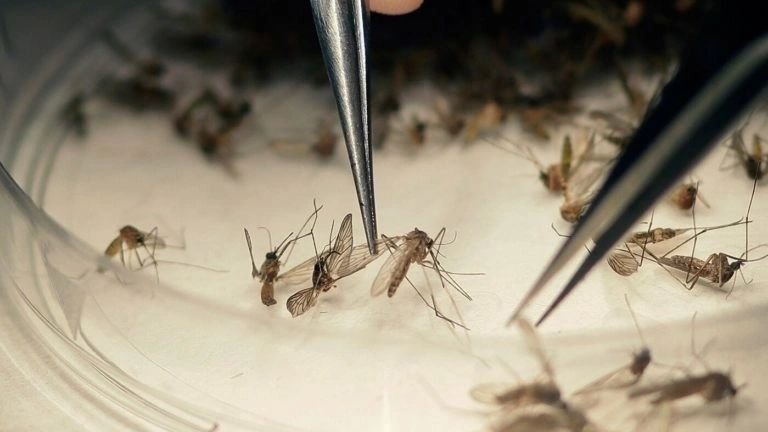
Transmitting West Nile virus, malaria, dengue fever
The high temperatures for the season create the ideal scenario for mosquitoes, which made their presence felt even during the mild winter.
Therefore, Regions and Municipalities are developing a comprehensive plan to combat mosquitoes, which are vectors of infectious agents for the transmission of diseases and dangerous infections.
In Attica alone, 85 traps have been placed, with the captured mosquitoes being epidemiologically monitored by the Hellenic Center for Disease Control and Prevention (HCDCP). The Region sprays every 15 days to eliminate larvae.
“Mosquitoes are being monitored for West Nile virus infection as an early warning system that directly guides intensified spraying actions in the area and public awareness,” notes Dr. Danae Pervanidou from the Department of Epidemiological Surveillance.
“The mild conditions observed this winter favored their continued activity and, in some cases, the presence of large populations (…) We are particularly vigilant about public health. The tiger mosquito is closely associated with dengue fever, which causes headaches and is a challenge for public health,” emphasized Entomologist Researcher at the Benaki Phytopathological Institute, Antonis Michailidis.
The Attica Region intensifies spraying for larvicides every 15 days from March to November.
“What we fear is the Egyptian mosquito, a mosquito that appeared in Cyprus, which has come very close to us. This mosquito transmits everything, Zika, Chikungunya, West Nile virus, malaria, and if it enters the country, we will have it as a carrier of these species and the new mosquito and the tiger mosquito,” stated the Head of Public Health of the Attica Region, Anna Megalou.
Stagnant water sources
Even a saucer of stagnant water remaining in a flowerpot can become a breeding ground for dangerous mosquitoes.
“It’s stagnant water; mosquitoes party there. They like to lay their eggs there (…) Municipalities must pay close attention to stagnant water sources; sometimes some fountains are not functioning, but they are a breeding ground for mosquitoes,” emphasized Deputy Regional Governor of Attica, Loukia Kefalogianni.
Sterilizing the tiger
A pioneering method applied in Greece by the Greek Atomic Energy Commission is sterilizing male tiger mosquitoes with small doses of radiation and then releasing them into the environment.
“Sterilized males that do not bite humans when they are outside in the field with wild females, the result will be infertile eggs,” said Entomologist Researcher at the Benaki Phytopathological Institute, Antonis Michailakis. This technique achieves a significant reduction in the population.
ERTNews Report: Katerina Christofilidou