
By Ioannis Th. Patellis
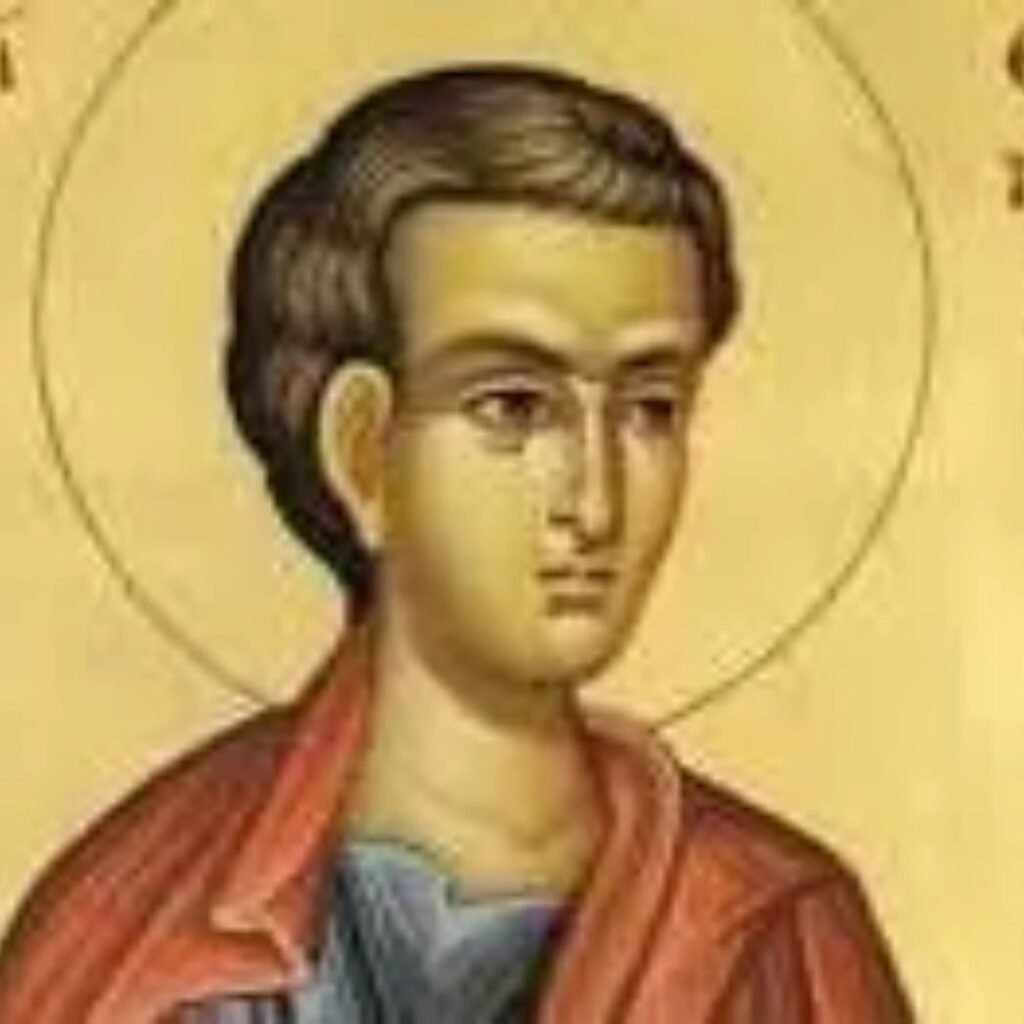
Personalities shrouded in the mist of doubt from the depths of history have always captured interest. And the Apostle Thomas, known as the “doubting” one, is among them. Today, during these days of the Resurrection, he comes once again into the spotlight.
From the Scriptures, only one manifestation of Thomas’s doubt has dominated collective memory, the most pivotal one: “But Thomas did not believe…” That is, the one tied to the cornerstone of Christianity — the Resurrection of Christ.
The other disciples, therefore, told the absent Thomas that they had seen the Lord resurrected, but he hesitated to believe them. Just as any mortal would hesitate, whose personal experience with the mystery of death aligns with common sense. John records Thomas’s reservations: “Unless I see the mark of the nails in His hands and put my finger into the mark of the nails, and put my hand into His side, I will not believe.”
The disciples did not need to be prophets to foresee that the Resurrection of the Lord would not be universally and unquestioningly believed. After all, the Jews and the Romans were the first to spread the claim that the followers of the Nazarene had stolen His body to claim He had risen. To silence all these critics — and those who would arise in the centuries to come — the episode of the tactile verification was included in the Gospel narrative. Jesus enters the house where the disciples were gathered, even though the doors were closed, and asks Thomas to examine the marks of His wounds: “Put your finger here and see My hands. Reach out your hand and put it into My side. Stop doubting and believe.”
Shortly before the crucifixion, Thomas’s doubt surfaced once more. When Jesus predicted Peter’s threefold denial and asked His disciples not to be troubled by His imminent departure to “the house of His Father” where He would prepare a place for them, He said: “You know the way to the place where I am going.” Yet, among all the disciples, again it was Thomas who expressed his honest confusion, grounded in simple human logic: “Lord, we do not know where You are going, so how can we know the way?” How could the humble fisherman Thomas claim to know something that, by the clear sense of human reason and experience, he did not know?
However, we would not be reading the situation correctly if we were to lightly characterize Thomas as a saint of doubt and an apostle of skepticism. Although his name became associated early on with distrust and questioning, he was neither weak in faith nor unbelieving. The Scriptures present the Apostle Thomas, called “the Twin” (from the Aramaic “Tauma”), as impulsive, brave, and ready to sacrifice himself for his Lord. He urged the other disciples, after Jesus’s arrest, toward self-sacrifice with the words: “Let us also go, that we may die with Him.”
Even his apostolic journey to India — his preaching, his miracles, his imprisonments, and his martyrdom — did not occur without initial resistance. When the territories were divided among the Apostles, and India fell to him by lot, Thomas again objected, asking to be sent anywhere but India. He was persuaded only through a vision prompted by Jesus.
A distinct personality, Apostle Thomas left a clear and enduring mark on the historical evolution of Christianity.
Kalymnos, May 2024.