
By Eleftheria Tiliakou, No Filter
The history of vasilopita is a graceful blend of history, faith, and folk imagination—like a recipe that worked and was wisely left unchanged.
At the heart of the tradition stands Saint Basil, Bishop of Caesarea in the 4th century. According to tradition, when a harsh governor demanded heavy taxation from the people, Basil asked residents to gather their gold and valuables to hand them over. In the end, the governor relented—or, by the more pious account, feared divine intervention. One practical problem remained: how could the valuables be returned when no one knew which belonged to whom?
The solution was ingenious and deeply humane. Loaves of bread were baked, with the valuables hidden inside. They were distributed to the people and—by miracle—each person found what they had originally offered. Thus the flouri was born: a small object carrying great hope.
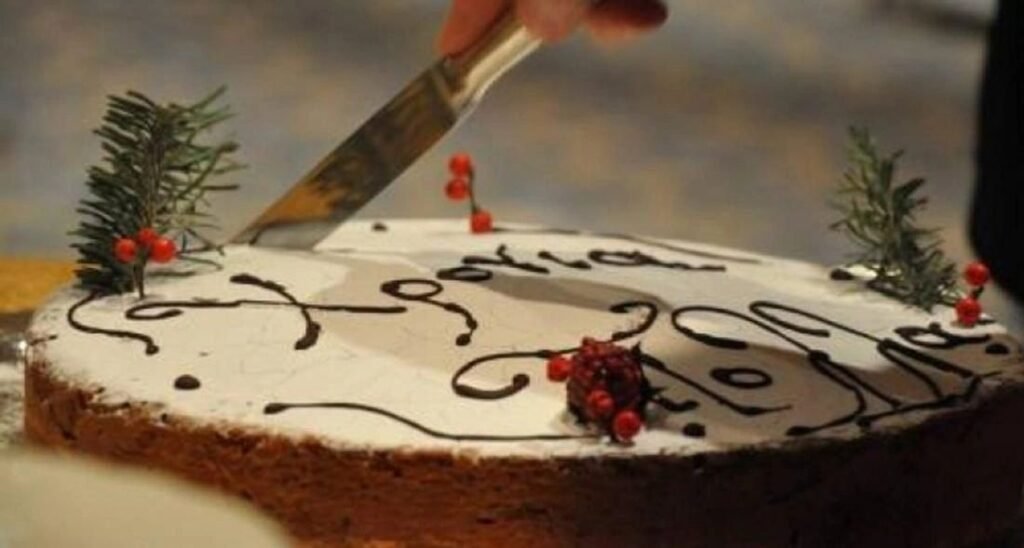
Over time, bread became sweet cake, simplicity became ritual, and vasilopita became inseparably linked with New Year’s Day, the feast of Saint Basil. The coin does not promise wealth; it promises good fortune—something far more valuable and certainly less taxable.
And so, every year, we cut the vasilopita not merely to see “who gets the coin,” but to remember that a new year begins better when it is shared. Luck, after all, favors tables surrounded by people.
And in politics?
Here the custom shifts level. Sharing vasilopita in political settings is not just a pleasant pause with smiles and photographs. It is a symbolic ritual of power, carrying deep cultural and political meaning.
In Greek political tradition, vasilopita serves as a declaration of unity. When a politician cuts and distributes the cake, the message is clear: “the space is here, the group is present, and we begin the year together.” It is a carefully staged moment of togetherness—even if ordinary confrontation resumes the very next day.
There is also an element of legitimization. The one who cuts the cake appears as the institutional host: mayor, minister, president, leader. They are not merely present; they are the one who “distributes.” And in politics, whoever distributes—symbolically or otherwise—exercises authority.
The flouri carries its own implication. Not so much luck, as optimism: “this year might go well.” If it goes to a close associate, it is read—half-jokingly but not innocently—as a good omen for the team. If it goes to a rival, the smiles remain… but tighten.
At the same time, the ritual borrows the moral weight of Saint Basil: sharing as an act of justice and care. Politicians, consciously or not, invoke this symbolism to project social responsibility. Whether that message is fulfilled is not judged by powdered sugar.
In short, vasilopita in politics is not dessert. It is a message:
unity, continuity, optimism—and a discreet reminder that “we hold the knife this year.”
Whether it is shared fairly afterward?
That is not decided by the coin.
It is decided by time.
#kalymnostimes #news #nofilter #vasilopita #politics #st.basil