

Written by Psychologist & Family Counselor Giannis Xyntaras
The Challenge of Single Parenthood
Some parents raise their children alongside a partner, sharing—more or less equally—the responsibilities, worries, and decisions of everyday life.
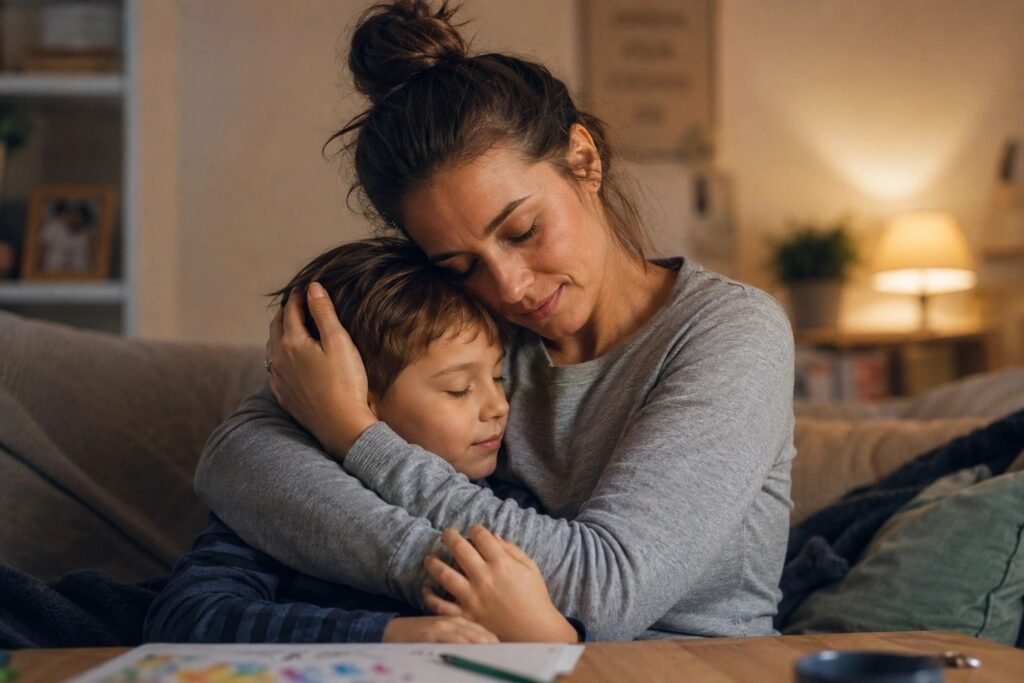
Others, however, are called upon to carry everything on their own. They are there when a child gets sick, feels afraid, needs help with schoolwork, or simply needs a comforting hug. They manage the household, work to support the family, worry about finances, make every important decision alone, and, amid all of this, try to remain emotionally available.
Single parenthood is not simply a different family structure. It is a daily reality marked by increased demands and, often, very little room to breathe.
What weighs most heavily is not always the number of responsibilities. It is the absence of someone with whom to share the burden. Someone to tell, “Today was difficult.” Someone to turn to for support without feeling that you are leaving a gap behind.
Over time, many single parents begin to believe they have no right to feel tired. As if they must remain strong at all times because there is no one else to fill the void. While this belief may seem logical, it hides a significant trap: no one can consistently care for others when they themselves are exhausted.
In psychotherapy, we often meet single parents who feel guilty whenever they need a little time for themselves. If they go out for a coffee, they feel they are taking time away from their child. If they ask grandparents or friends for help, they worry they are not doing enough. If they reach a breaking point, they fear it means they have failed as parents.
In reality, the opposite is true. A parent who recognizes their limits and takes care of themselves is not less responsible; they are more available for their child.
There is another challenge that is not discussed often enough. Many single parents feel they must also compensate for the absence of the other parent. They try to be both strict and gentle, stable and fun, determined not to let any sense of lack become visible.
As well-intentioned as this effort may be, it can become exhausting. No one can be two people at once. And ultimately, children do not need that.
Children do not grow up healthy because their parent is perfect or because every possible need is met. They thrive when they feel loved consistently, listened to, guided with clear boundaries, and supported by someone who remains emotionally present—even when that person is tired or makes mistakes.
What a child truly needs is not a superhero. They need a real human being. Someone who can say, “Today was a difficult day,” without losing credibility as a parent. Someone who is not afraid to ask for help and who teaches, through their own example, that strength does not come from carrying everything alone.
True strength lies in knowing when we, too, need support.
Perhaps this is the most important message for every single parent. You do not need to prove that you can do everything alone. That is not what your child will remember when they grow up. More likely, they will remember that even during difficult times, there was someone who loved them consistently, stood by them, fought for them every day, and despite exhaustion and challenges, never stopped giving them the most important gift of all: the feeling that they were not alone.
Because in the end, what helps a child grow is not the number of people around them. It is the quality of the relationship they build with the person who stands beside them every day.