

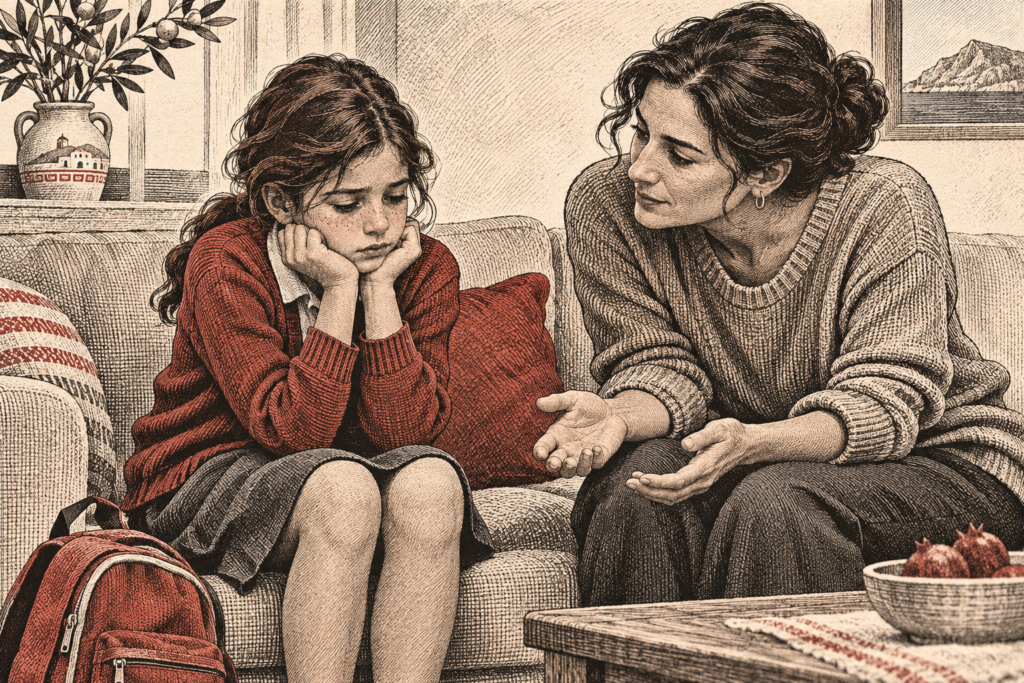
“He didn’t invite me to his birthday party! And he invited almost the whole class!”
A child comes home from school upset. They drop their schoolbag on the floor and try to explain what happened. Their parent listens and, hoping to reassure them, replies: “Come on, it’s not such a big deal! You have plenty of other friends. Don’t get so upset over a party.”
The intention is good. The parent is trying to help the child put things into perspective. Yet the same event does not always carry the same weight for everyone.
To an adult, a birthday invitation may seem unimportant. For a child, however, being included in a group, feeling accepted by their peers and having a sense of belonging are important parts of everyday life.
What we see as a minor disappointment may feel like rejection to them.
Something similar happens when a child is upset because they lost a game, a treasured possession broke, or their best friend chose to play with someone else.
Often, in our efforts to comfort them, we rush to explain why there is no reason to be upset. We remind them that there are more serious problems, that they will soon forget about it, or that it is not worth worrying about so much.
There may be some truth in these words. Many things that upset us do indeed become less important over time. But the child has not yet reached that future moment. They are here, today, where what happened still hurts.
And when they repeatedly hear that they are overreacting, they may begin to question whether their feelings are acceptable or deserve anyone else’s attention.
This does not mean we need to agree with every reaction or treat every difficulty as a major crisis.
We can acknowledge their sadness while also helping them develop a fuller understanding of the situation.
“I can understand why you’re upset that he didn’t invite you, especially since you think of him as a friend. Would you like to tell me what happened?”
A response like this gives the child room to speak. It also gives us an opportunity to understand exactly what has hurt them, instead of assuming we already know.
We may discover that the problem is less about the party and more about the fear that others do not like them. Or that their disappointment is connected to a series of earlier experiences we knew nothing about.
We can then talk with them about what they could do, how they might handle the situation, or whether they need some help.
Acknowledging children’s feelings does not prevent them from learning to manage disappointment. On the contrary, it can give them the sense of security they need to work through it.
Perhaps an important part of parenting is remembering that children experience the world on their own scale.
And that even when something seems small to us, we can treat it with respect, because it matters to the person in front of us at that moment.
By Giannis Xintaras, Psychologist and Family Counsellor