

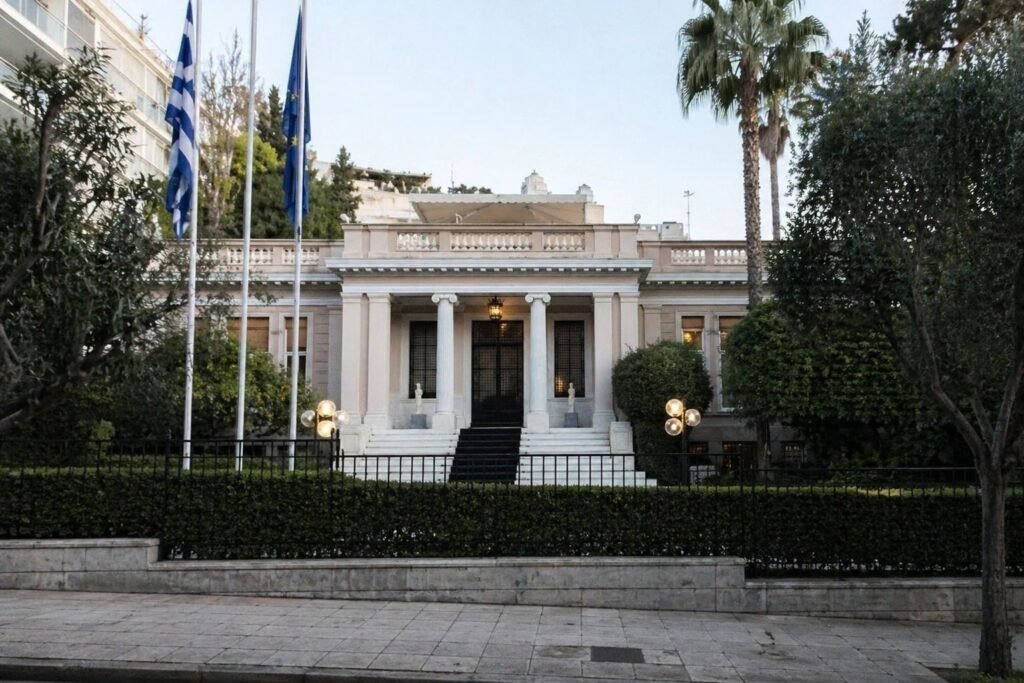
Rift within New Democracy – Five MPs challenge the “executive state” model
Internal tensions are emerging within Greece’s ruling New Democracy party, following a joint intervention by five MPs from the governing majority, who openly criticize the current model of governance and the operation of the so-called “executive state.”
In an article published in the newspaper Ta Nea, Athanasios Zembilis, Andreas Katsaniotis, Xenophon Baraliakos, Giannis Oikonomou and Ioannis Pappas take aim at what they describe as an excessive concentration of power at the center of decision-making, directing clear criticism toward the Prime Minister’s office. Their intervention comes in the wake of developments surrounding the OPEKEPE scandal and the wiretapping affair.
The five MPs are effectively calling for a reassessment of the government model, arguing that the concentration of responsibilities within closed circles of power has downgraded the role of ministries, the parliamentary group, and regional authorities.
They also make indirect references to Minister of State Akis Skertsos, who has been closely associated with the design and functioning of the executive state model.
According to the MPs, Greece does not need a system where “a few decide for everyone,” but rather a governance model that ensures effective coordination alongside institutional balance. While acknowledging that the executive state proved effective during times of crisis, they argue that under normal political conditions it reveals structural dysfunctions.
They further criticize the distribution of accountability, noting that successes are attributed to the central leadership while failures are shifted downward. MPs, they stress, should not be treated merely as messengers of pre-decided policies or as bearers of political cost.
Finally, they reject the replacement of elected officials by non-elected technocrats, emphasizing that democratic legitimacy stems from the vote of citizens, not from closed technocratic centers.
Their proposals include stronger ministries, clearly defined responsibilities, genuine political accountability, enhanced parliamentary oversight, and greater regional participation.
Source: www.in.gr