

Written by Psychologist & Family Counselor Giannis Xintaras
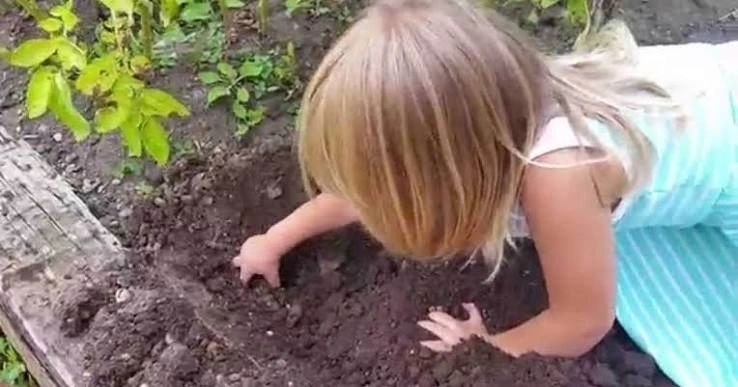
There is an image that has become increasingly common: children who are clean, well-groomed, protected… and somehow disconnected. Disconnected from the soil. From the mud. From that “messy” side of childhood that cannot be easily controlled. And somewhere in our effort to keep them safe, we may be distancing them from something essential.
Because children need to get dirty. Not just because “it’s okay,” but because it is actually good for them—literally.
Research shows that the natural bacteria found on our skin are not enemies. On the contrary, they are part of a complex process that helps the body regulate inflammation and protect itself. In simple terms, the body learns to defend itself by interacting with the environment—not by avoiding it.
And yet, as parents, we often do the opposite. We clean, disinfect, control. We try to prevent every possible risk. And that is completely understandable. We live in a time that constantly tells us to “be careful,” linking cleanliness with safety and health. Gradually, we begin to fear what once felt natural.
The child who runs outside and gets covered in mud.
The child who falls, gets up, and runs again.
The child who touches, explores, experiments.
That child… now makes us anxious. And without realizing it, we begin to restrict them.
“Don’t get dirty.”
“Be careful.”
“Don’t put that in your mouth.”
And somewhere along the way, the message shifts—from “explore” to “be careful.”
But childhood is not meant to be sterile. It is meant for experience. For contact. For experimentation. For small risks that build a stronger body and mind.
When a child plays outside, they are not simply “getting dirty.” They are learning. Learning about their body. Their limits. The world around them.
And perhaps this is something worth reflecting on: in trying to protect children from the environment, are we distancing them from life itself?
Because life is not clean. It has dirt. It has uncertainty. It has moments that cannot be controlled. And if a child never comes into contact with these… how will they learn to deal with them?
This does not mean leaving children unprotected. It means rediscovering balance. Between protection and trust. Between “I take care of you” and “I let you try.”
Because in the end, the issue is not cleanliness. It is the child’s relationship with the world.
Do we want a child who is afraid to touch?
Or a child who dares to explore?
A child who avoids?
Or a child who tries, falls, and rises again?
Perhaps the answer is simpler than it seems.
Let them play.
Let them get dirty.
Let them live a little beyond what is “proper.”
Because within that small mess, something far more important than cleanliness is being built:
Resilience.
Confidence.
Life.
https://xidaras.gr/%CE%B2%CE%B9%CE%BF%CE%B3%CF%81%CE%B1%CF%86%CE%B9%CE%BA%CE%BF/