

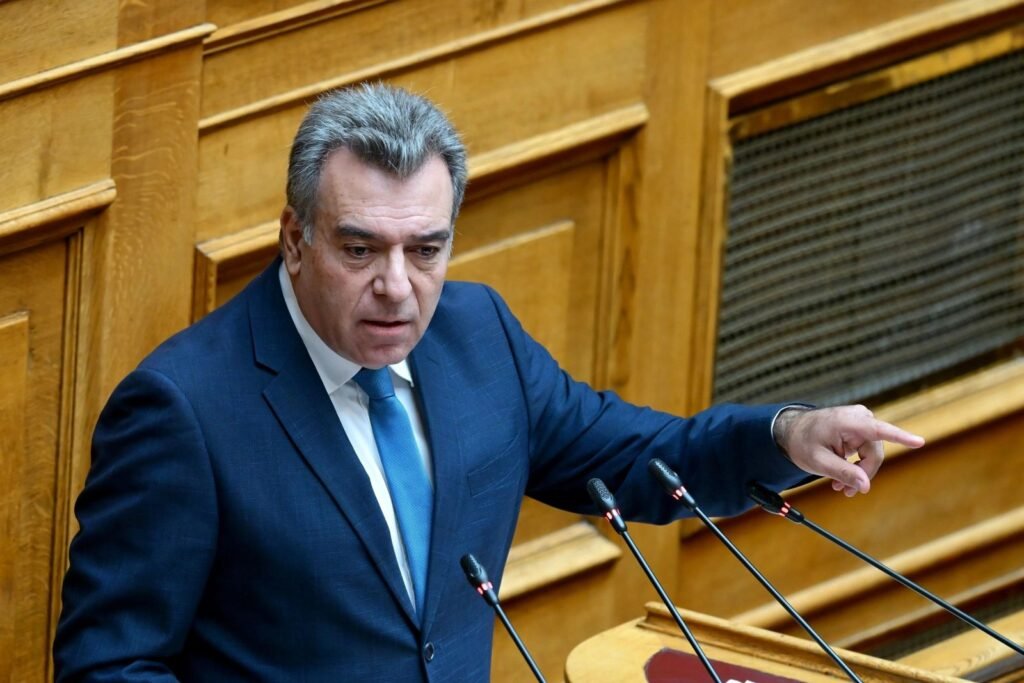
Dodecanese MP Manos Konsolas stressed that the transition to a modern and highly capable state, one that serves citizens instead of burdening them, remains a top priority for the government, speaking before the plenary session of the Hellenic Parliament on a new bill aimed at reducing bureaucracy and simplifying administrative procedures.
Mr. Konsolas noted that the institutional and practical reforms being promoted confirm the commitment to building an efficient state, while the digitalization of public structures and services has already significantly improved the level of service provided to citizens.
Under the key provisions of the bill, citizens will no longer be required to submit supporting documents for the issuance of an administrative act. Instead, a sworn declaration will be sufficient, and the relevant administrative act must be issued within three months.
At the same time, the bill provides for an end to state claims on properties owned by private citizens, mandatory digital updates to applicants regarding the progress of their requests, and easier transfer procedures for seized properties, with the Independent Authority for Public Revenue collecting the outstanding debt at the time of transfer.
Mr. Konsolas also highlighted the new role of notary offices, which are to operate as “one-stop shops” for a range of property-related procedures. Notaries will be connected with the Technical Chamber of Greece for the issuance of the electronic building identity, as well as with the tax authority for tax exemption cases. They will also handle transfer tax declarations and the payment of the corresponding amounts.
The Dodecanese MP also reiterated his proposal to improve public service in island and mountainous areas where key public and private service structures have been suspended or closed, including ELTA postal branches, tax offices, banks, social security services, ticket offices, and other state services.
In this context, he proposed institutional certification and incentives for businesses and one-stop service offices in these areas, so that residents of rural and remote Greece can carry out locally a wide range of transactions that currently require travel or access to services that are no longer available nearby.
As he underlined, meaningful tax incentives and installation funding are needed for the creation and operation of such offices, while the relevant ministries could also cooperate in establishing an institutional framework that would allow private companies and organizations to work with these one-stop service centers in remote parts of the country.
“It is very important that in areas of rural Greece, which in recent years have seen services and structures shut down or withdraw, citizens are able to complete all their transactions and receive new and upgraded services through a one-stop shop in their place of residence,” Manos Konsolas said.