
{"ServiceProvider":"meizhuo","Time":"2026-07-24 12:20:58.644","ContentID":"d1862915f5f9486f863e975e1ebdcc2f"}
Avrithis Launches Scathing Attack on Kos Municipal Authority over Landfill Dispute
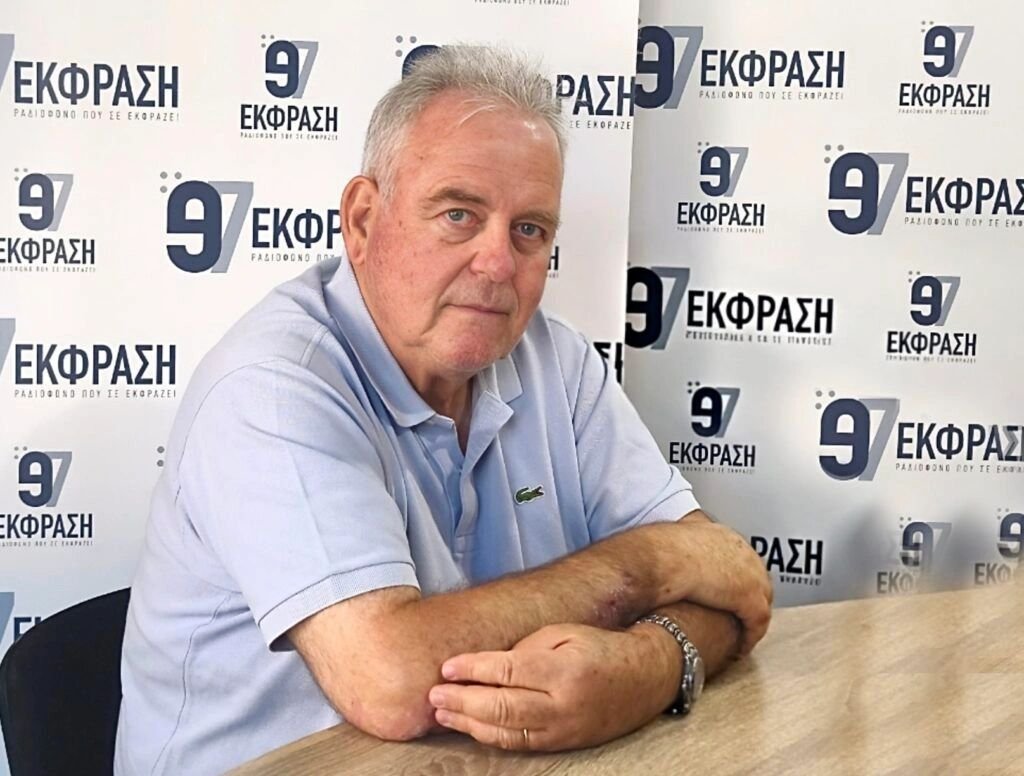
Independent Kos municipal councillor Panagiotis Avrithis strongly criticised the municipal administration during an appearance on Panagiotis Zouzounis’ programme “Sta Kokkina”, accusing it of mishandling the dispute over the Kos landfill and the transfer of waste from Kalymnos.
Avrithis described the Municipality of Kos’ legal challenge against the relevant decision as incomprehensible and harmful. He argued that the move was driven by Mayor of Kos Theodosis Nikitaras’ political confrontation with South Aegean Regional Governor Giorgos Hatzimarkos.
“No complaints have been made”
Addressing the actual situation on the ground, the independent councillor claimed that waste from Kalymnos had already been transported to Kos for a month, without any related complaints or problems being reported.
“I am informing you that waste from Kalymnos has been arriving here for a month. Has anyone heard anything? Has anyone ever complained? There are complaints about the roads, the dust, our own vehicles and the refuse trucks leaking liquids—not about those arriving from Kalymnos,” he said.
Avrithis argued that instead of challenging the landfill’s operating permit and the law itself, the discussion should focus on ensuring that the planned waste-processing facility receives sufficient quantities of material.
“Instead of criticising the Regional Governor for sending us only Kalymnos’ waste, and not waste from Leros and Patmos as well, so that the incoming plant can reach its target of 60,000 tonnes, we are challenging the operating permit and the law itself,” he stated.
“The condition of the landfill has changed”
The independent councillor also spoke of hypocrisy surrounding the landfill’s capacity and condition, maintaining that the facility has improved considerably compared with the past.
In his view, instead of assessing the present situation in a different spirit and seeking solutions for the future, the confrontation is being maintained for reasons which he described as “personal, petty political egoism”.
Asked whether the municipal authority’s actions were politically motivated, Avrithis was categorical:
“He wants to confront the Regional Governor… But order is being restored, a new plant is coming, along with an investment of €110 million.”
He also challenged the argument that the landfill cell is approaching its capacity, claiming that once the new facility is completed within two years, the residual volume requiring burial will be reduced dramatically.
Avrithis referred to problems which, according to him, had occurred in the past and questioned why the present concerns had not been expressed with the same intensity when subsidence and a landslide had reportedly occurred at the site.
“If the landfill closes, where will Kos’ waste go?”
Concluding his intervention, Panagiotis Avrithis raised the question of what would happen to Kos if the legal challenge resulted in the suspension of the landfill’s operating permit.
“Suppose that tomorrow the appeal succeeds and an injunction is issued against the landfill. That would automatically mean that the landfill no longer has an operating permit. Hatzimarkos could then say: ‘My permit has been withdrawn; the landfill is closing.’ Has anyone answered the question of where our waste will go?” he asked.
The independent municipal councillor called on the Kos administration to present its alternative plan for managing the island’s waste if the facility’s operation is suspended, concluding with the pointed question: “What are we doing? Are we playing games?”