
No filter, by Eleftheria Tiliakou
The online platform for applications regarding the free distribution of composters by the South Aegean Solid Waste Management Agency (FoDSA) opened this past Monday. Based on a brief personal inquiry, it appears that many of our fellow citizens are hesitant to apply for these free composters. Understandably so — many people simply don’t know how composting works. They worry about odors, insects, and are unsure how to use the final product — the compost — especially if they don’t have gardens or crops. Others see it as a hassle. That’s why I believe a public awareness campaign by local media could make a real difference.
On the one hand, we rightly demand proper waste management to protect our health, our environment, and the public image of our island. On the other hand, we hesitate to engage with a program that offers us a free, practical solution. With the right information and media support, citizens may be encouraged to embrace composting on a trial basis. And if the pilot succeeds, I believe more people will follow the example of their composting neighbors.
I have personally applied for a household composter. Depending on the specific criteria — such as household size — applications will be reviewed and satisfied accordingly.
About the Smart Household Composter
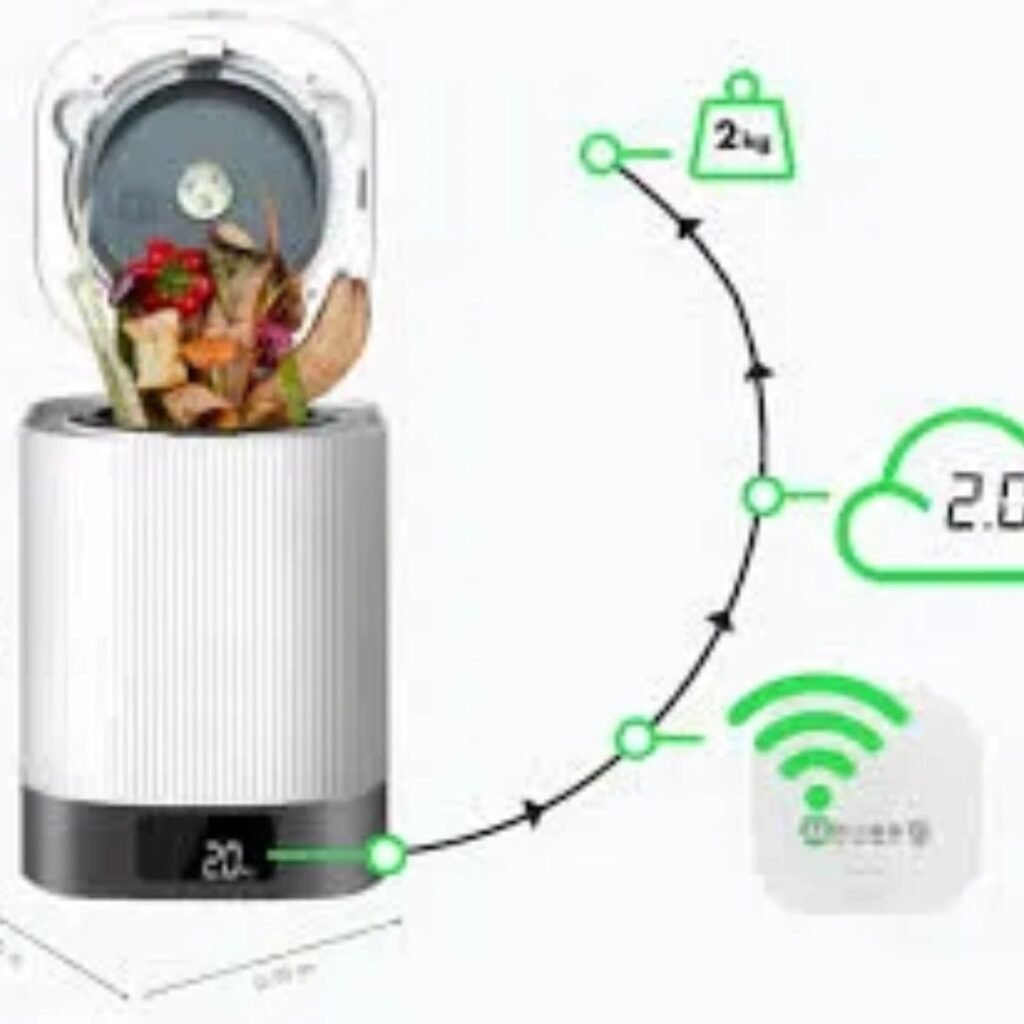
The automatic home composter accelerates the natural decomposition process of organic waste by using controlled heat, ventilation, and stirring to turn it into a soil-like material within a few hours or days.
Basic Operation Stages:
- Adding Waste: Users insert organic waste (e.g. fruit and vegetable peels) into the device’s bin.
- Grinding & Mixing: Built-in blades or paddles break down the waste into smaller pieces to increase surface area and speed up the process.
- Heating & Drying: The unit heats the waste to high temperatures (around 160°C or 40–70°C depending on the model), eliminating pathogens and weed seeds. Most of the moisture (organic waste is 70–80% water) evaporates, greatly reducing the volume. The released air usually passes through a carbon filter to remove odors.
- Aeration: A fan or air pump ensures continuous oxygen flow, supporting microbial activity.
- Microbial Boost (optional): Some models use microbial starters to speed up biological transformation.
- Cooling: Once the cycle is complete, the material is cooled for safe removal.
The final product, often described as a soil enhancer rather than full compost, is a dry, fine material ready for use in gardens or indoor plants.
Using the South Aegean FoDSA Smart Composter
The smart composters distributed by FoDSA are part of a home composting initiative aimed at reducing household organic waste.
Key Features and Benefits:
- Ease of Use: Operates with the press of a button.
- Waste Reduction: Reduces organic waste volume by up to 90%.
- Soil Enhancer Production: Transforms food scraps into a nutrient-rich material suitable for plants.
- Odor Control: Designed to be airtight, with activated carbon filters to minimize odors.
Operating Process:
- Add organic waste to the device.
- Heating & drying remove moisture and deactivate pathogens.
- Grinding accelerates decomposition.
- Air filtration neutralizes smells.
Each unit comes with enough consumables (like filters) to last for one year.
What You Can and Cannot Compost in the Smart Device
✅ Suitable for:
- Fruit and vegetable scraps
- Cooked food leftovers (pasta, rice, soups)
- Small amounts of fish, meat, cheese
- Bread, cereal, baked goods
- Pet waste (dogs and cats)
❌ Not suitable for:
- Bones (meat, chicken, fish)
- Wood, branches, plants
- Eggshells
- Metal, plastic, paper, glass, fabric
- Oils and fats
- Raw or large pieces of meat
The device is designed specifically to handle the above approved materials to ensure effective and efficient operation.
Conclusion
The success of any environmental program depends not only on available tools but also on public participation. The smart composters distributed for free by FoDSA South Aegean represent a valuable opportunity to change our habits and contribute actively to reducing organic waste on our island.
With proper education, training, and support, initial hesitation can be turned into environmental action. Let’s take the first step — because our island’s future deserves to be cleaner, greener, and more sustainable.