
Kalirroe Peponi – CNN Greece
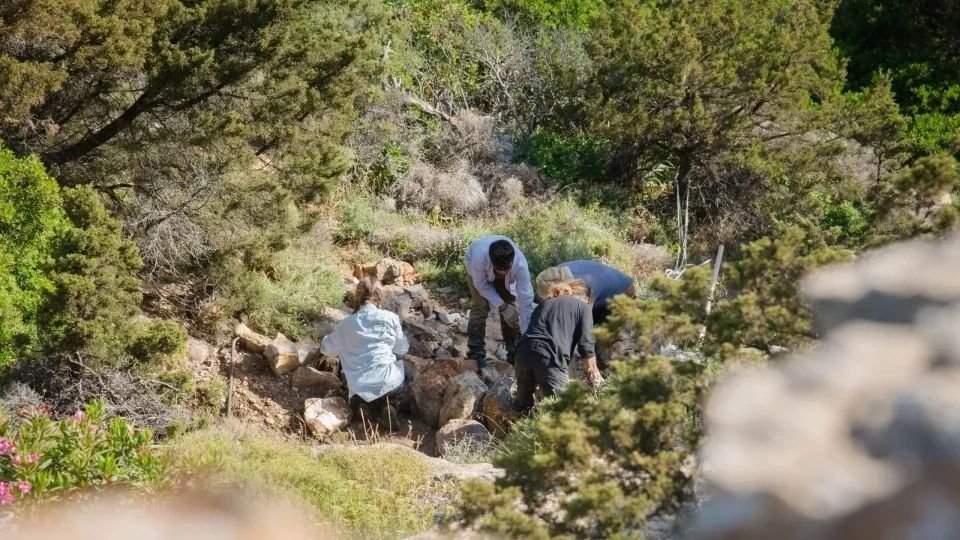
With the compass of managing water flow in periods when water management becomes a challenge, a centuries-old traditional technique is being revived in Sifnos to give life—or rather flow—to the streams of Taxiarchis Skafis and Choni: the technique of stone check dams.
Investing in the wisdom of the past for a sustainable future, the contribution of the 120 stone check dams being constructed in the two streams offers significant environmental benefits. During rainfall, they retain part of the water, enriching the aquifer, enhancing biodiversity, and mitigating the risk of floods and droughts.
“This practice demonstrates how cultural heritage can serve as a pillar for sustainable development,” notes Sophia Tzouli, the Water Program Manager at the Mediterranean Institute for Nature and Man (MedINA), speaking to CNN Greece.
“The turn towards practices such as stone check dams is not merely a return to the past but a conscious choice in the face of contemporary environmental challenges,” emphasizes Kostas Petrakos, Project Manager of CARDIMED at MedINA.
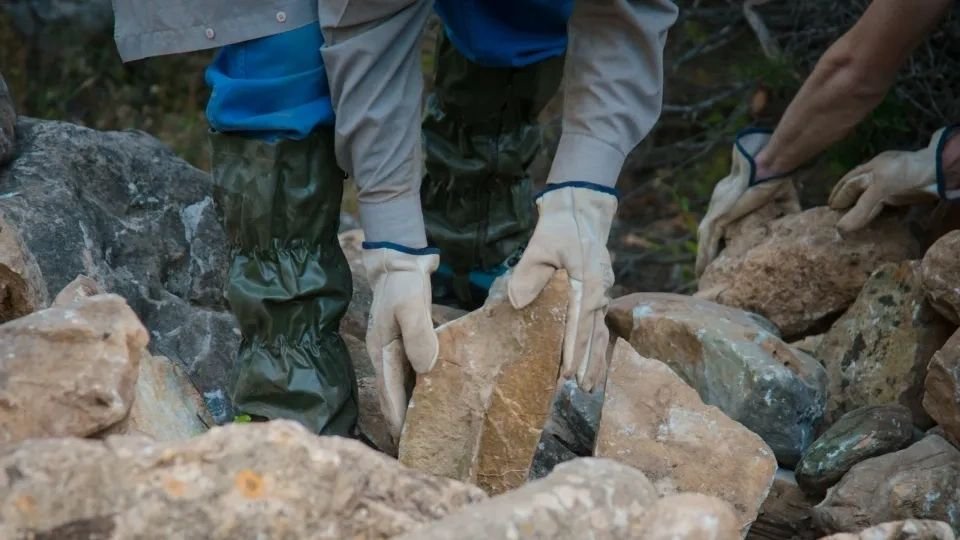
What are stone check dams?
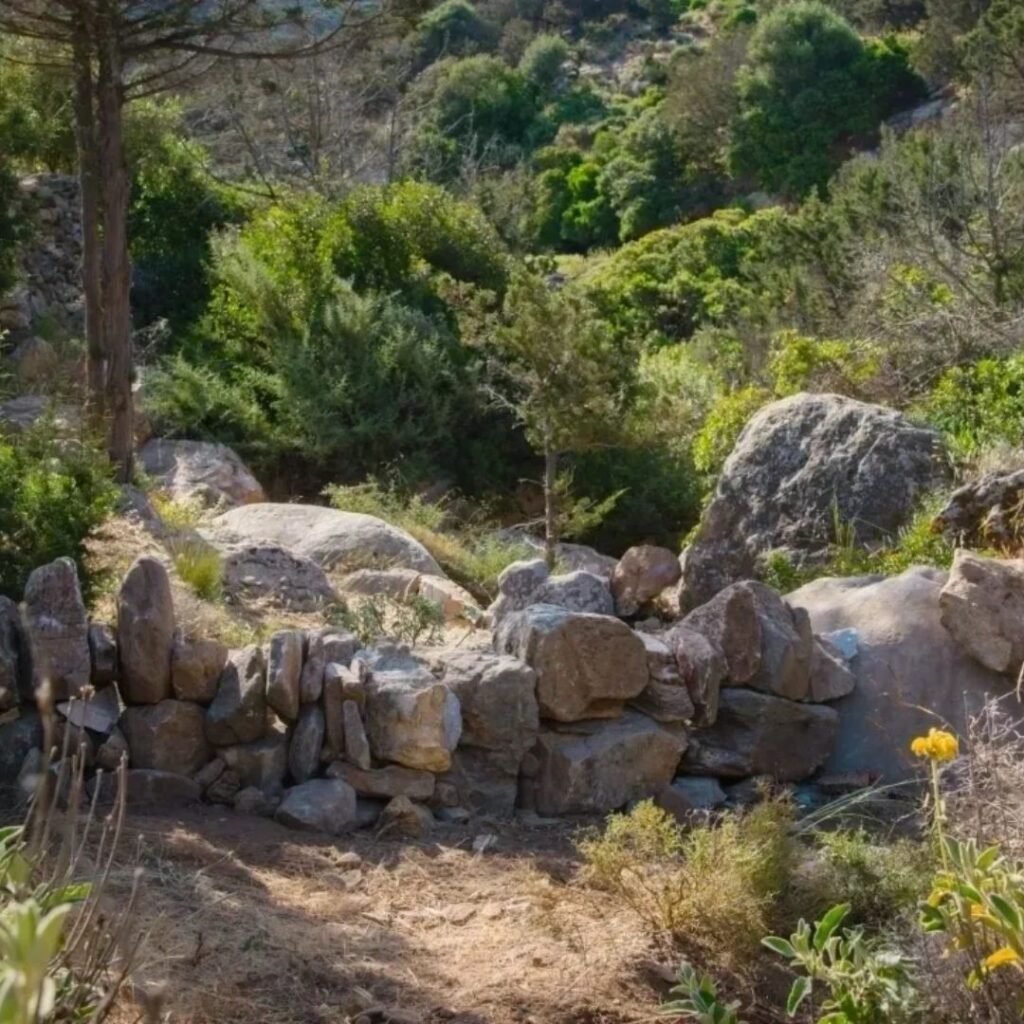
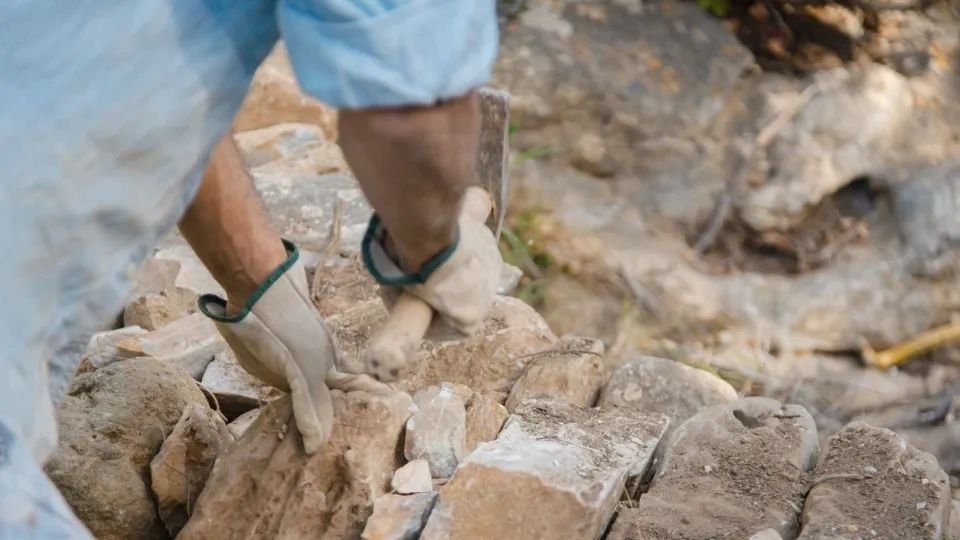
Stone check dams are a traditional water management practice widely found in the Mediterranean islands. Like the characteristic terraces that created cultivable surfaces on the islands, check dams are built exclusively with the dry-stone technique—using only stones, without any binding materials.
Their role is simple but crucial: they “step” the stream beds, slowing down the water flow and allowing it to remain longer in the island’s hydrological cycle instead of going directly to the sea. This technique, known since antiquity—as shown by archaeological findings—was mainly used for crop irrigation and exemplifies the ingenuity of local communities in managing limited water resources.
It’s worth noting that, so far, thanks to collaborations with a broad network of stakeholders, civil society organizations, local authorities, and active citizens, networks of stone check dams have already been implemented in Paros and Ios, while in Sifnos, the practice is being applied to two different streams within the same watershed.
In the case of Sifnos, the stone check dams are built in two of the island’s most significant streams, Taxiarchis Skafis and Choni. As Mr. Petrakos explains, these streams “collect water from many smaller branches that start from the island’s higher areas and play a key role in its hydrological balance. They eventually lead to the main Kamares stream, where key social and tourist infrastructures, as well as the island’s port, are located.”
The overflow of the Kamares dam in 2017
As he points out, this is particularly important “for an area with intense human activity and, consequently, a high flood risk.” He also recalls the overflow of the Kamares dam in 2017, which “highlighted the need to strengthen the system’s resilience.”
“Based on these data, the selection of these specific sites for the construction and maintenance of the check dams was aimed at preventing similar events in the future,” the civil engineer says.
What tools were used for this project? “The process relied on both field research and modern tools, such as drone photogrammetric surveys, to identify the most suitable sites for intervention. It’s a mild and targeted action, grounded in scientific knowledge but also the needs of the local community,” says Mr. Petrakos.
Check dams deeply tied to the cultural identity of the islands
As the experts emphasize, the practice of check dams has its “roots” in the past.
“In the Aegean islands—and the Mediterranean in general—where water resources are limited, local communities have always utilized traditional techniques to manage water,” notes Ms. Tzouli.
“One of these was the construction of stone check dams in ephemeral streams, i.e., streams that flow only during rain. These check dams, deeply connected to the cultural identity of the islands, are an example of gentle and environmentally friendly intervention,” she continues.
Why? Because they harness the natural dynamics, the land’s characteristics, and local materials, aligning with so-called “nature-based solutions,” which are increasingly essential as humans often turn to more invasive and sometimes sweeping methods.
Preserving precious water resources
In such times, the benefits of check dams are manifold. As the civil engineer explains, “they retain and slow down water flow, facilitating its gradual infiltration into the soil.”
“This way, the aquifer is replenished, and the impacts of floods and droughts—which, due to climate change, are becoming more frequent and intense—are reduced,” she stresses.
She also adds that, simultaneously, “valuable water reserves are preserved for agricultural and other uses, while the ecological quality of habitats for many plant and animal species that depend on the presence of water is enhanced.”
Does returning to the past show the way to addressing the challenges of the present and future?
“In times when extreme weather events, ecosystem degradation, and pressure on natural resources are becoming increasingly intense, large-scale projects with heavy environmental footprints often prove inadequate or overly invasive,” Mr. Petrakos answers.
Nature-based solutions
“On the contrary, ‘nature-based solutions,’ which draw on the experience of past generations and respect the natural features of each place, offer more flexible and sustainable approaches,” he adds, noting that “traditional techniques combine low cost, gentle integration into the landscape, and multiple benefits.”
At the same time, he emphasizes that reviving them “reconnects local communities with the knowledge and practices that helped them live in harmony with nature for centuries. It’s a modern view of progress that recognizes the value of cultural heritage as part of the solution, not as something outdated.”
Initiatives like this one for stone check dams highlight a significant wager, as Ms. Tzouli points out: “Caring for water is everyone’s responsibility, especially on the water-scarce islands of the Aegean, where every drop counts.”
Thus, through the implementation of stone check dams, traditional knowledge is harnessed to enhance the natural renewal of water and protect the landscape.
“This simple yet essential solution shows that we can work harmoniously with nature, not against it. By applying it, we can increase water availability, strengthen biodiversity, and shield our communities from climate change,” she emphasizes.
And the message they send is clear: “Water protection is not just a technical challenge—it’s a collective responsibility.”
If you’d like, I can help refine or summarize further for a more concise version. Let me know!