

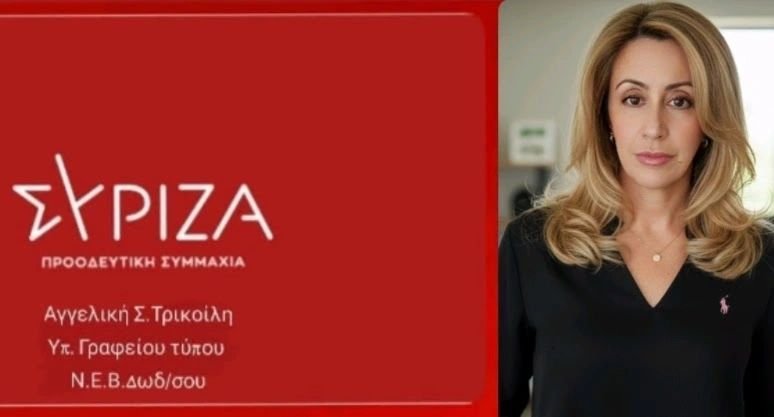
Angeliki Trikoili
Philologist – Coordinator of Kalymnos Local Organization
Revisiting ideological roots is sometimes necessary in order to redefine our direction and, consequently, our future prospects. Only by understanding where we come from can we feel confident about where we can and should go.
The idea of unity among political forces representing social classes — such as the working or middle class — is not new. Antonio Gramsci addressed this necessity through the strategy of the “United Front” (Fronte Unico). According to him, the working class must unite around immediate economic and political demands (wages, working hours, freedoms) in order to break its isolation.
Gramsci emphasized that unity does not concern leadership alone (e.g., Communists and Socialists), but primarily the masses of workers who, regardless of party preference, share common class interests. The core idea is that unity transforms a fragmented mass into a cohesive social force. For the working class to become hegemonic, it must first achieve internal unity by overcoming narrow corporatist interests and rallying around a shared program defending popular interests.
Today, the question arises whether the conditions for such unity exist and what is truly at stake for political parties, whose primary role should be to serve society as a whole rather than a selected economic elite.
In the field of labor, workers face significant pressures. Legislative changes concerning flexible working hours, extended schedules, and fragmented leave arrangements have increased insecurity. At the same time, workplace accidents are rising, while weakened oversight mechanisms and labor inspections raise concerns about safety. Announced measures to strengthen collective agreements do not include the restoration of the National General Collective Agreement or the principle of the most favorable regulation, effectively limiting workers’ rights.
Meanwhile, the cost of living continues to strain households. Inflation and rising prices in food, clothing, utilities, and health insurance are eroding disposable income. Substantive interventions to control prices, reduce taxation on essential goods, and address excessive profiteering are emerging as central social demands.
In housing, rental costs have become prohibitive for young people seeking to plan their future. Social housing programs, utilization of unused properties, and guaranteed housing for public servants in islands and remote areas are essential for supporting regional development and balanced growth.
In the primary sector, rising production costs, energy expenses, and delays in compensation threaten the survival of farmers and livestock producers. Reducing energy costs, ensuring fair subsidy distribution, and strengthening livestock production are critical for safeguarding domestic production.
At the same time, strengthening public health and education through permanent hiring, meaningful incentives, and fair compensation for doctors and teachers is essential for adequately staffing regional structures.
Finally, declining trust in institutions and the degradation of parliamentary discourse raise serious concerns. The erosion of institutional roles and the transformation of political debate into spectacle undermine democratic functioning.
Ideological isolation, self-referential politics, and fragmented party interests offer no solutions to the survival challenges eroding the social fabric. Society has the right to a life of dignity. Progressive political forces bear a historic responsibility to help secure it.