

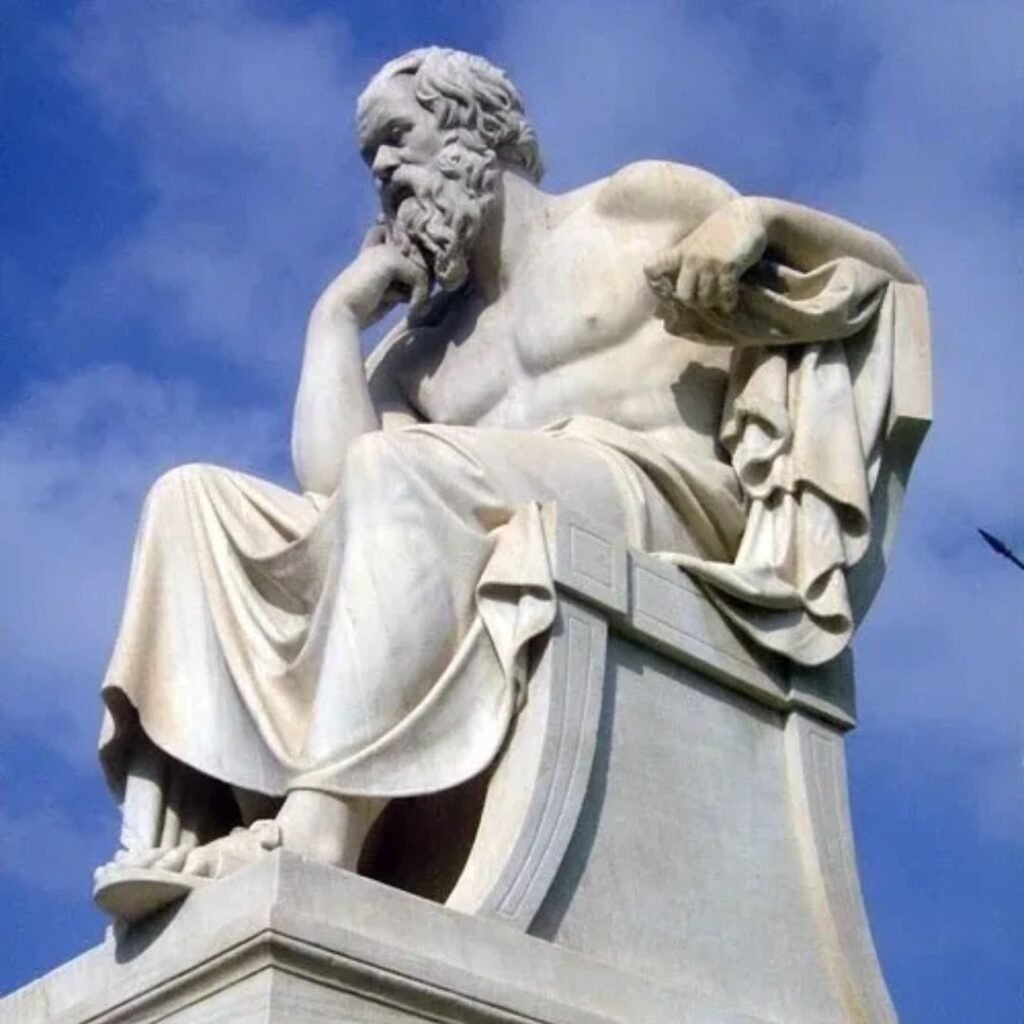
The discussion on their future prospects is not new, but perhaps today it is more urgent than ever. The diagnosis of the crisis in the humanities, as one of the academics in this small feature notes, has now become a certainty both inside and outside the country. Can their decline be reversed? On the occasion of the conference organized by the Cultural Foundation of the National Bank of Greece on the future of the humanities in Greece (Tuesday, June 3), Kathimerini asked five professors and speakers of the event for their views.
Sakis Ioannidis
KOSTIS KORNETIS
Assistant Professor of Contemporary History, Autonomous University of Madrid
Policies must enhance their visibility
The discussion on the crisis in the humanities has moved from diagnosis to confirmation: departments of philology, philosophy, archaeology, and history are shrinking or closing globally, and student attendance is dramatically decreasing. After all, these fields do not offer immediate job security. Yet, their decline amounts to self-sabotage, as the skills cultivated by the humanities and social sciences—critical thinking, interpretive ability, and cultural understanding—are precisely those needed for our uncertain future.
What can be done? They must certainly be redefined through creative engagement with digital technologies, interdisciplinarity, and social engagement—and above all, through strong political support that recognizes there can be no democratic thought without the humanities. Policies are needed that enhance their visibility and perceived value: from supporting interdisciplinary research centers and programs to institutional links with education, media, museums, and local governance. Finally, we must defend their supposed “uselessness”—that is, their unique ability to ask questions that other sciences ignore, about memory, forgetting, power, and justice. The goal is not mere survival, but their reintegration at the core of an education that forms thinking citizens—not just future workers.
CHRISTINA KOULOURI
Historian, Rector of Panteion University
The utilitarian assessment of degrees
The humanities, once the crown jewel of university departments, are attracting fewer and fewer students for several reasons. Primarily, there is a utilitarian evaluation of degrees based on the labor market and a narrow matching of studies with professions. Universities are seen more as training institutions than as places of learning, which hurts the humanities most. Additionally, because international bibliometric systems used to evaluate universities are based on the model of the hard sciences, humanities departments rank low in academic classifications, creating the false impression that they lack scientific value. University department evaluations based on international rankings inevitably influence prospective students’ choices and also affect funding, leading to a vicious cycle of declining research in the humanities.
It is difficult to reverse this trend, as it has global roots, but there is a growing demand for humanities graduates in companies and industries due to their “soft skills” and critical thinking. On the other hand, the humanities must adjust their curricula through interdisciplinary approaches, especially in combination with new technologies. Ultimately, we must remind society what it seems to have forgotten: the significance of humanistic education for its future and its cohesion.
ANGELA KASTRINAKI
Dean, School of Philosophy, University of Crete
The fear of underemployment and unemployment
When I graduated in 1984, I could be hired as a substitute teacher in secondary education and get tenure a year later. My classmates rushed to finish their degrees in four years. Today, job prospects in secondary education, public or private, including tutoring and private lessons, are dim, and permanent positions are nearly unattainable. How can the humanities in Greece not sink? Why would young people choose them, when all they see ahead is underemployment or unemployment?
Last night, walking with a colleague, we ran into a brilliant student. We enthusiastically encouraged her to join our postgraduate program. But then we grew melancholic: does this girl have a future in academia? When our classes are shrinking, new hires are trickling in, if at all.
Is recovery possible? Thankfully, yes. Because people will always need philosophy, literature, art, and history. These studies will never become mass disciplines again—demographic trends are against them, with fewer children being born. But the number of older adults is growing. I believe part of our academic offerings should target them: to train educators for older learners. For our survival, for social cohesion, and to foster well-being.
KOSTAS KOSTIS
Professor Emeritus, National and Kapodistrian University of Athens
Oversupply guarantees declining quality
There are two aspects to understanding the state of the humanities and social sciences in Greece. First, there’s the issue of oversupply, which cannot be deemed satisfactory. Too many university departments admit students with low entry scores, who graduate without even basic knowledge in their field. These departments, scattered across Greece, may serve political or local needs—this is why they exist—but they cannot meet the quality standards we should expect from these fields. This oversupply inevitably ensures the declining quality of various humanities and social science disciplines.
On the other hand, we live in societies that assess social contributions through money, which is usually found in fields very different from the ones discussed here. Thus, the social prestige of the humanities and social sciences keeps diminishing in favor of technological and financial sectors.
We must also remember that younger generations struggle to dedicate time to reading, which limits demand for disciplines that require deep engagement with texts, even in digital form. The future of the humanities and social sciences looks bleak, especially given the lack of prospects for educational reform—a system that bears great responsibility for the current situation.
MICHAEL HERZFELD
Anthropologist, Professor Emeritus of Social Studies, Harvard University
Victims of today’s intellectual looting
A fundamental problem with the humanities is that they require humanity. Trapped between the bureaucratic view of university work on one hand, and increasingly abstract theoretical models on the other, they struggle to resist today’s neoliberal, utilitarian marketplace of ideas—and the appeal of the more readily understood physical sciences. Moreover, they risk being among the first casualties of the intellectual looting currently underway in the United States.
What we see at Harvard, for example, marks the beginning of an openly hostile campaign against the intellect—one that far-right populists rightly see, from their perspective, as an enemy force that constantly disproves their conspiracy theories and resists the totalitarianism they wish to impose on the world. They understand that disciplines like History, Social Anthropology, and Sociology, along with critical literary and art analysis, are equipped to counter their efforts to shape a world without the freedom to express ourselves—to hold differing opinions that, even in disagreement, sharpen the precious gift of good-faith critique.
Source: wwww.kathlmerini.gr