
By Ioannis Th. Patellis
The word “Pascha” is Hellenized and originates from the Jewish “Pesach,” which means “passage” or “crossing.”
It is one of the major holidays of the Israelites, dedicated to the memory of a significant event in Jewish history: the passage of the Jewish people through the Red Sea and their liberation from Egyptian slavery.
During the celebration of the Jewish Passover, in early spring and on a Saturday, only “unleavened” bread is found in Jewish homes, in memory of their hasty escape from Egypt—when, pursued and in a rush, they had no time to let their dough rise, baking their bread unleavened on the hot desert stones.
Christ, a Jew by flesh, did not ignore the Jewish Passover. He celebrated it with His disciples at the “Last Supper,” giving it a new meaning, which is the essence of the Christian Easter: the completion of His redemptive work for humanity and the passage—through the Divine Passion—toward the Heavenly Father through His glorious Resurrection.
The Christian world may have borrowed the symbolism of Easter—the “passage”—from the Jews, but it gave it new content. After all, the Resurrection of the God-Man is the cornerstone upon which the Christian faith is built.
Today, once again—as we do every year—during springtime and nature’s rebirth, we celebrate our Easter, the greatest holiday of the year for Christianity.
Only now, during these festive days, we have been trying in recent years to organize our own “passage,” our own “crossing”—from the subjugation of the “memoranda” to the normal life of a free country, equal to the other nations of the European Union, to which we belong.
The completion of this effort and the liberation from the “Pharaonic dominion” of today’s troubled world is not easy.
Next to us, in our neighborhood, two wars are still raging, our eastern neighbor constantly threatens our territorial integrity, and suddenly, a new global war of tariffs and economics has emerged.
However, our internal situation and the mindset with which we move forward today do not seem to have learned much from the bitter decade of the “memoranda.”
And I’m not only referring to our inability to “put two trains on different tracks,” but primarily to the economic situation.
I believe the biggest problem today is not just putting food on the table—though even that comes with difficulty. It’s the loss of the small comforts, the basic pleasures, which are also traditionally tied to major holidays, like Easter.
A few years ago, there was a different atmosphere. Shops decorated their windows with spring fashions, an enticing lure for young women trying to spot the “Attrattivo” blouse, the “Dolce & Gabbana” pants, and the heels that suited them.
Shopping picked up at the beginning of Holy Week when the holiday bonus hit the bank ATMs and various “holiday loans” boosted the market.
For the working class, salaried employees, and pensioners, these small benefits ensured some basic comfort. They allowed people to buy a pair of shoes and a chocolate egg for their godchildren, some small gifts for children and grandchildren.
They made it easier to purchase the necessary lamb for the traditional “mouri” (oven-roasted lamb), the centerpiece of the Easter table.
This spring, this Easter, these little pleasures are not possible. Maybe it’s the calendar’s fault, placing Easter so far from pension payment dates this year, or maybe it’s the soaring price of lambs—contrasted with the plummeting popularity of politicians in the polls.
I feel that this year’s Easter atmosphere takes me back quite a few years—to the deprived early post-war period.
But we’re not returning to the innocence of old-time tales either: the wandering pen with the Easter lambs and our mother bargaining with the butcher over the price of the lamb we had “set our eyes on.” A transaction that took place in the middle of the street, with no cameras, no butchers’ union presidents or ministers—just us kids watching barefoot, with patched-up shirts and hand-me-down UNRA pants.
This spring, this Easter, arrives without many illusions of a “passage” into a blooming landscape of better days.
But Easter wishes will once again be generously exchanged through the media, always leaving a small window of hope open.
Happy Resurrection to all!
Kalymnos, Easter Eve 2025
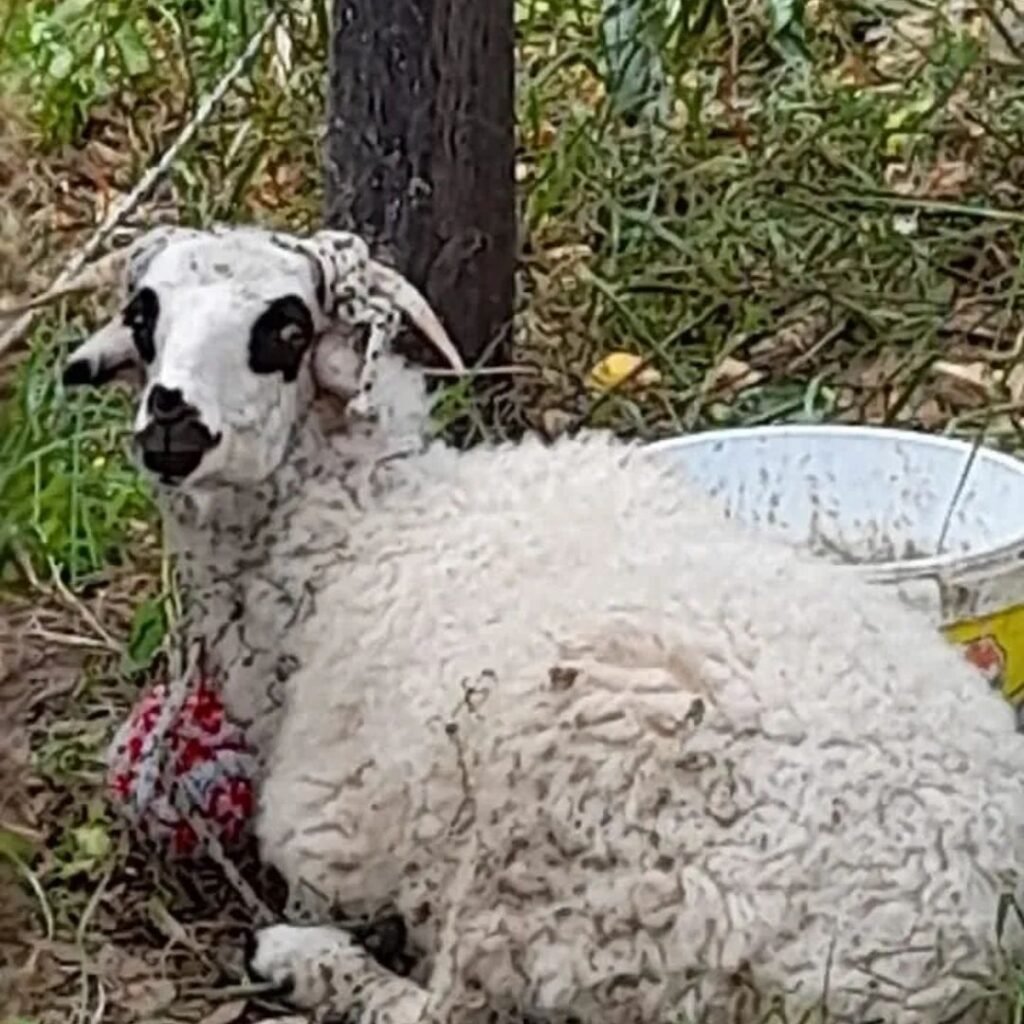
P.S. The photo was borrowed from my friend Michalis Kapellas, with his beautiful folkloric touch, and I thank him.