

A Greenpeace analysis estimates an average additional energy cost of around €300 per household over six months compared with 2021 prices.
Higher energy prices added an estimated €61.5 billion to the cost of household energy consumption across the European Union between March and August 2026, compared with prices during the same period in 2021, according to a new analysis by Greenpeace Belgium.
That represents an average of approximately €300 per household. The figure estimates the impact of price differences; it does not represent measured additional spending by every household.
Compared with 2025 prices, the analysis puts the additional cost for the same six-month period at €5.35 billion. This pressure persists despite a 13% decline in EU household energy consumption between 2021 and 2024.
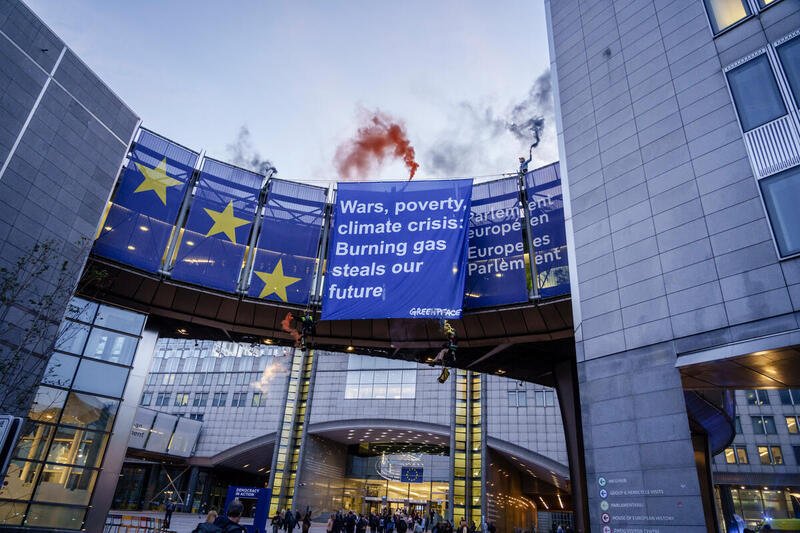
The findings accompany protests in Brussels involving activists from 17 countries through the People vs Gas coalition. Campaigners are calling for protection for vulnerable households, a phase-out of fossil gas and faster access to reliable, affordable renewable energy.
According to the campaign announcement, Greenpeace climbers displayed banners on the European Parliament building, using theatrical smoke to simulate a fire. Other activists gathered in Place du Luxembourg, where the Red Rebels staged a performance symbolising climate-related loss and destruction. Extinction Rebellion Belgium activists also unfurled a banner inside Parliament reading “Gas kills.”
Thomas Gelin, of Greenpeace’s European office, criticised continued dependence on fossil fuels, linking it to rising living costs and the consequences of the climate crisis.
The campaign coincides with the October 15–16 European Council meeting, whose agenda includes measures to ease the impact of high energy prices on citizens and businesses, alongside efforts to reduce Europe’s dependence on fossil fuels.
The organisations are demanding a short-term emergency plan to protect households, identifying taxes on oil and gas company profits as a key funding option.
In Greece, Greenpeace’s national office argues that temporary subsidies must be accompanied by accessible home energy upgrades, prioritising vulnerable households and tenants. The aim is to bring lasting reductions in bills, improve heating and cooling conditions and reduce dependence on fossil fuels.