
Explosive Allegations Against the Tourism Office in Rhodes: Unauthorized Works with Possible Cover-Up?
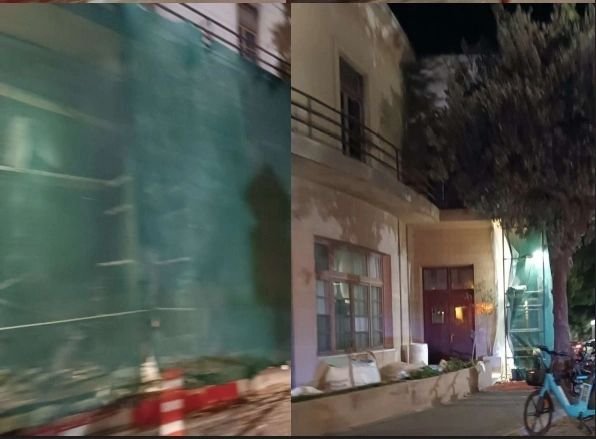
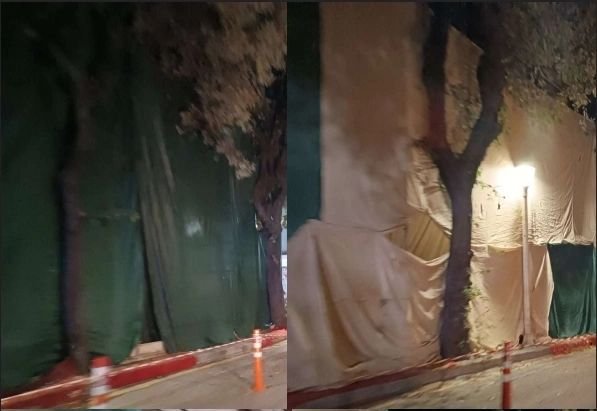
According to an anonymous complaint submitted by concerned citizens, serious administrative and financial irregularities have been identified at the Dodecanese Regional Tourism Office in Rhodes. The complaint highlights that construction activities (including demolition and reconstruction) are currently taking place on the office building during peak tourist season — without the legally required permits, posted signage, or official assignment decisions, as mandated by Greece’s public procurement laws.
Strikingly, the director of the office — known in the local community for her strict enforcement of regulations against business owners — is allegedly failing to comply with the very rules she imposes on others. It is also noted that the office has no legal authority to commission construction works, being restricted to procurement of supplies only. These facts raise serious concerns about non-transparent procedures and potential protection from higher-level officials.
Legal Framework Ignored
Greek law requires that for any public works to proceed, the corresponding funds must first be “committed” by an official decision, which must be published on the government transparency platform Diavgeia. If the amount exceeds €1,000, the announcement must also be posted on the official public contracts website. A call for tenders must follow, and once a contractor is selected, a decision of assignment must again be posted online. For amounts exceeding €2,500 (net), a formal contract is also required. Without these steps, no public works can legally begin.
These procedures are clearly defined in Law 4412 (Public Procurement), Law 4270 (Public Accounting), and other related legal texts and ministerial circulars.
Missing Permits, Missing Money, Missing Contracts?
To erect scaffolding (“ikríoma”), a small-scale building permit is legally required (Article 29 of Law 4495). A relevant permit was indeed found on Diavgeia here:
🔗 https://diavgeia.gov.gr/decision/view/ΨΛ9Ο46Ψ842-ΩΩΒ
However, no committed funds were found for that permit, and no assignment decision to any engineer was identified.
On the other hand, a fund commitment of €20,000 was found for the works on the building’s balcony, listed here:
🔗 https://diavgeia.gov.gr/decision/view/Ψ916465ΧΘΟ-ΕΨΖ
This amount was also published on the official procurement portal:
🔗 https://cerpp.eprocurement.gov.gr under ID 25REQ016960524, with the corresponding tender ID 25PROC017162538.
Yet, even in the tender announcement, there is no mention that the contractor must obtain a small-scale permit for the scaffolding. So, how was the scaffolding erected without allocated funds or a formal request? Even worse: no decision of assignment to any company or contractor was found for the demolition and construction works. No signed contract between the office and any service provider was located either.
This case poses urgent questions about legality, oversight, and transparency in a public service responsible for upholding the tourism image of one of Greece’s most visited islands.