
1950s. Sarakosti (Lent) in full swing. A sweet, fragrant scent filled the spring night. Over the ruined medieval castle of Chorio, which for centuries had held within it the souls of all the islanders to protect them from the onslaughts of the Barbary corsairs, a cuckoo proclaimed the fair weather. It was a starlit night, and the municipal lights (lanterns—oil lamps) were lit in the narrow streets. At that hour, Chorio came alive. It was the season for sponges, days for gathering crews, and the old aristocratic capital, Chora, was in its glory.
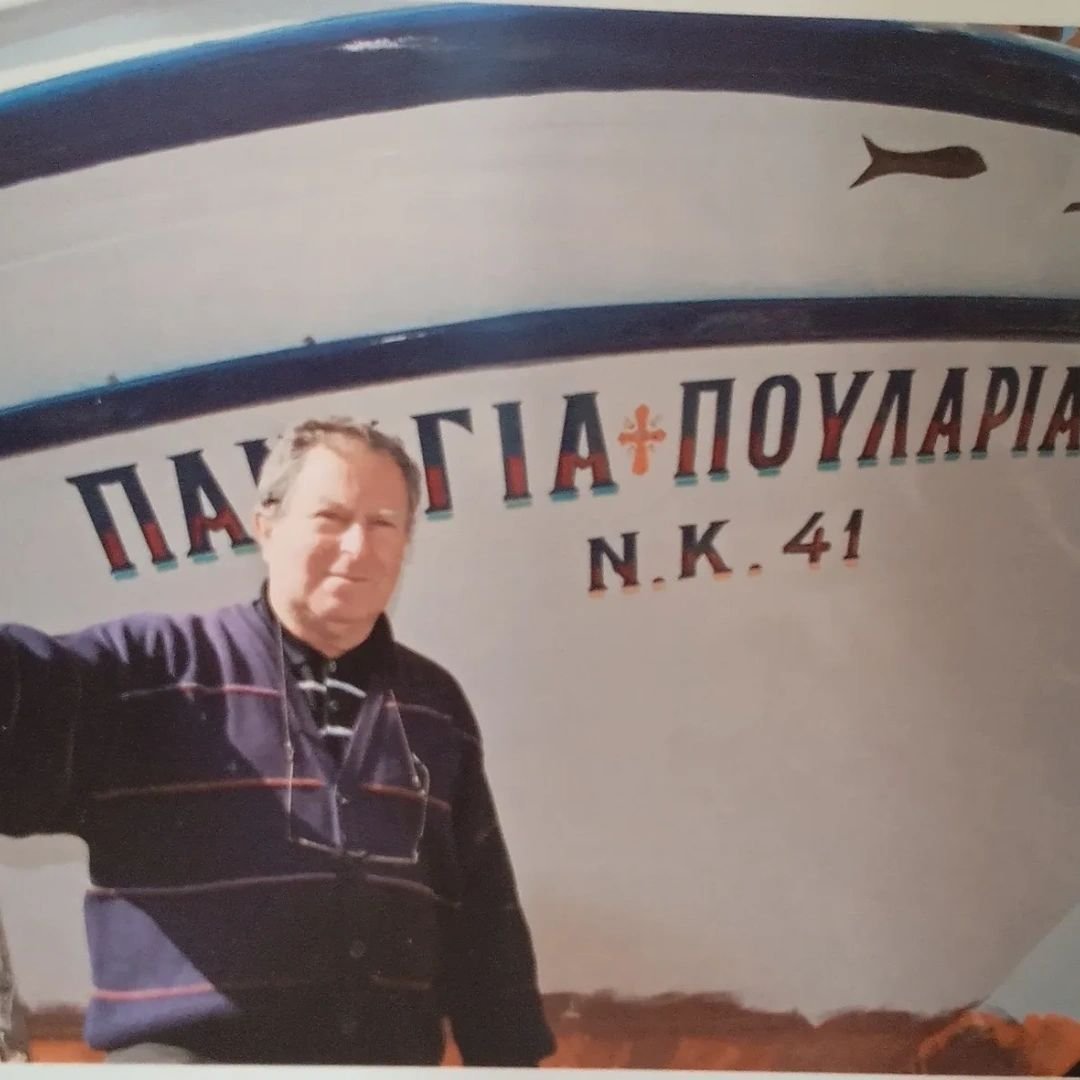
Most of the residents made a living from sponge harvesting. Some with the diving helmet—the Machine, others with the Diving Apparatus—Fernez, and others naked with the skandalopetra or the free dive. And then there were the “kupfaes,” the deck crew (oarsmen, helmsmen, cooks, balers, etc.). All were good workers of the sea and skilled divers. Toughened by the salt, strong, resilient, hard-working, and, above all, honest and honorable. Their word was their bond. They valued the bread they ate! That’s why all the captains and funders of sponge-diving caiques fought to secure them and get them to work for them.
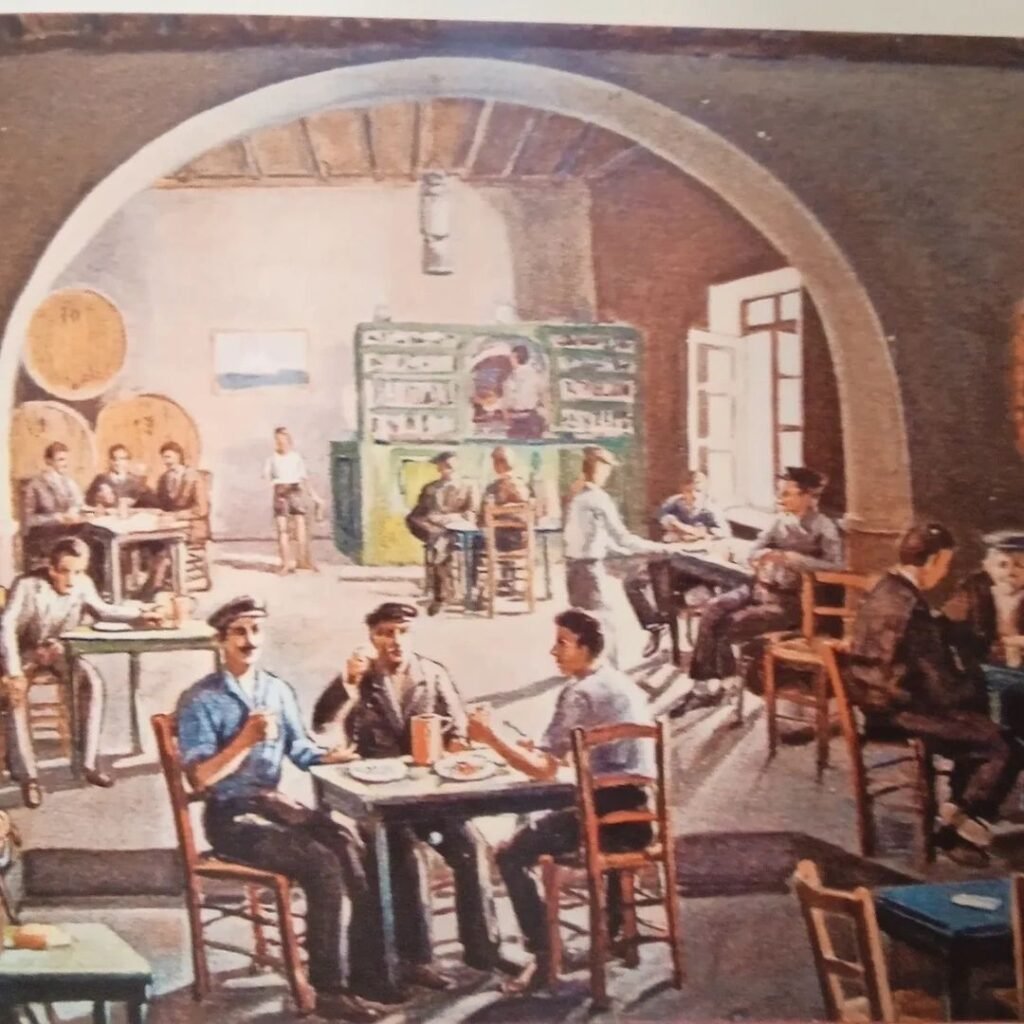
So, the captains of Pothia, the harbor capital, with their men, and their arrangements, went up towards Chorio, sidling up to the divers and crews, bargaining with them. The taverns and cafes were packed with sponge-diving clientele, as well as people who were tied to the sponge trade—shopkeepers, merchants, butchers, bakers, shoemakers, masons, carpenters, and others—waiting for the sponge divers to assemble so they could get advances from the captains and, in turn, collect the debts that had accumulated day by day. All winter, they had carried them on their backs—crediting them, not without cost, of course!
Outside, in the Tsoukoua district and around the courtyard of Kecharitomeni, the large church of Panagia with the honey-colored headscarf, which residents of Chorio had built when they descended from the Great Castle after the pirates had disappeared from the Aegean, there were holes and taverns, corners and cafes, swarming with the sponge-diving crowd! Familiar faces who had worked together on summer and winter sponge-diving journeys were reunited. They searched for well-known figures, pretending to be concerned—”Where could that person be? He’s disappeared from the scene.” They formed groups, old friends, co-godparents, kumbaroi, treating each other, fishing out each other’s intentions; offers were made directly or through intermediaries.
- “Which captain will you sail with this year? Come with me and you’ll be well-fed. I have strong backing and a reliable boss. Big departure, strong pay!”
- “How much do you offer? What are the percentages? How many shares? Where’s the voyage to? In what waters—in what depths will we work?”
The whole give-and-take, the dealings of the sponge-diving trade, took place at a table or standing at the counter of the tavern, where the barrel taps never closed for a moment, the wine flowed over the cobbled streets, and the demijohns of raki and ouzo emptied as if they were leaking. At the same time, the seafood appetizers came and went on full plates and soup tureens. At such times, over wine and revelry, they bargained for “the price of the honored doomed sponge diver” who gambled his life, heads or tails, knowing full well that this year might be his last! And his mind, dizzy, his passions filled his chest, youth up for bargaining, and life—the scoundrel—danced a swaggering dance to the notes of the violin, the santouri, the lute, and the shepherd’s bagpipe.
An excerpt from Giannis Cheilas’ work, “The Sponge-Diver’s Dance,” 2024.
Anyone interested in purchasing this work by Mr. Cheilas, please contact 6978280313.
#kalymnostimes #kalymnos #news #sponge-diving