

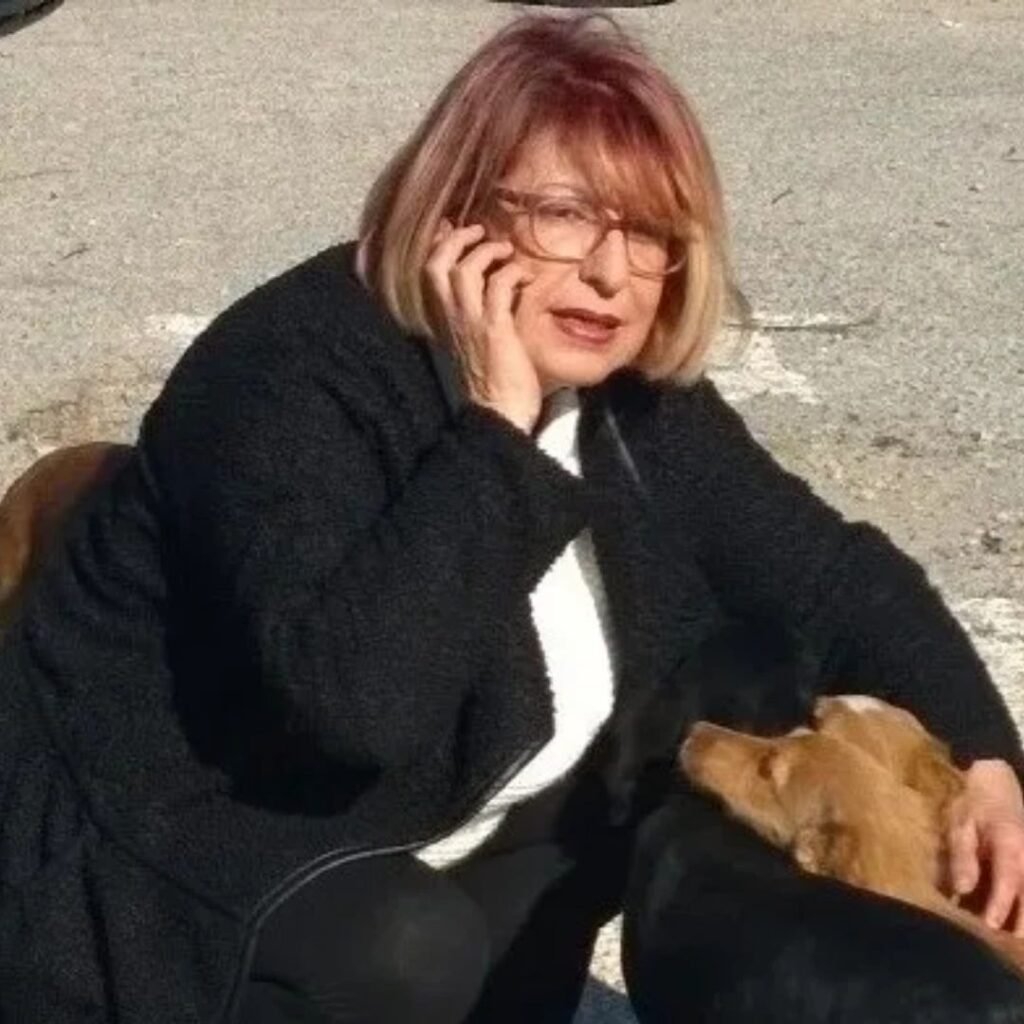
Ιnterview with Ms. Natasa Bompolaki, former founder-president of the Panhellenic Animal Welfare & Environmental Federation (2010–2023) and current President of NEMESIS—the largest voluntary environmental, animal‑welfare, and anti‑hunting organization in Greece—published for Kalymnos Times.
Interview: Understanding the Scope of Animal Abuse in Greece with Natasa Bompolaki
Animal abuse is not limited to “isolated incidents” — it spreads across every corner of the country, and Kalymnos is only one example among many. We spoke with Natasa Bompolaki, founder‑president of the Panhellenic Animal Welfare & Environmental Federation (2010–2023) and current President of NEMESIS, the largest volunteer environmental, animal‑welfare, and activist organization in Greece. She has devoted her life to defending those who cannot speak for themselves.
### Kalymnos: What is the current situation regarding animal abuse, and how did the wider public first become aware of the issue?
Kalymnos has long concerned us through reports received from local animal-welfare groups and individual volunteers. Complaints have involved not only companion animals like dogs and cats, but also birds of prey (Spizaetus), horses, and more. For dogs in particular, we’ve always received many reports. A common theme from residents was the police’s indifference and inaction in animal abuse cases—something we have repeatedly raised. The latest complaint came just days ago from a tourist who provided photographic evidence. What makes it especially alarming is that the same tourist had reported the same case in writing to the police four years ago. Yet, upon returning to Kalymnos, she found the dogs in the same conditions.
### Have you witnessed any cases that deeply shocked you? What has left the biggest mark?
I was profoundly affected the first time many years ago when, after a complaint in Chania, I visited a neighborhood as president of the animal‑welfare society I founded in 2007. I saw a puppy hanging from a tree. I couldn’t bear the sight—I cried and cried under that tree. Even now, recounting it, it horrifies me, and I’m overwhelmed with sorrow. Since then, I’ve witnessed multiple cases of hanged animals, but I never got used to such a tragically shocking scene. If someone ever stops feeling sadness or outrage at such cruelty, it reflects a pathological moral decay. Violence, especially towards vulnerable beings—animals, children, or the elderly—represents the ultimate form of dehumanization.
### How do local authorities respond to reports, and what are the biggest obstacles you face in seeking justice and protection?
It took many years of advocacy—meetings, protests, campaigning—for enforcement agencies to begin acting on citizens’ and NGOs’ reports. Even now, we see serious dysfunctions in their execution: legal ignorance and a lack of animal-welfare awareness among police, municipal, veterinary, and prosecutorial authorities. Their judgments often reflect personal, anthropocentric views—based on a lack of education, empathy, and sensitivity—that place above the law. Despite progress achieved through our persistent efforts, the barriers in our interactions with the authorities remain very high. Systematic training in animal welfare and enforcement is long overdue.
### Is there political will to implement change, or do we still face indifference and cover-ups?
Let me be absolutely clear: there is no political will across Greece’s political spectrum—governments, parties, MPs, and authorities. If there were, the tragic scenario of millions of stray, neglected animals in Greece would have been resolved long ago, as it has been in many other European countries. Real change requires courage from policymakers: confrontation with those exploiting animals—hunter networks, breeders, importers, and municipal contractors. Yet politicians have avoided this conflict—they refuse to risk losing votes. Instead, they offer theatrical displays while ignoring the root problems. Their priority is votes, not the welfare of animals.
### What does Greek law state about animal abuse, and what fails in practice?
Animal cruelty laws categorize offenses as felonies or misdemeanors under Law 4830/2021. Acts described in Article 24—such as inhuman confinement, non-therapeutic injury, fights, abandonment of newborns—are felonies punishable by 1–10 years imprisonment and fines of €30,000–50,000. Misdemeanors carry 1–5 years with suspension. In theory. But in practice, defendants use legal loopholes and appeals, and felonies are often downgraded or dismissed. This impunity fuels the expansion of abuse, leading Greece to “top the list” in Europe for cruelty cases. It’s deeply shameful.
### What solutions do you propose for the stray animal crisis in Greece?
The stray animal problem won’t be solved with half-measures. Greece counts over 4 million stray animals and is growing. Real change needs:
- Reallocating wasted funding from costly shelters toward spay/neuter programs.
- Mandatory municipal vet practices with emergency accommodation and universal sterilization programs for strays and owned animals, especially for vulnerable groups.
- Proper municipal veterinarian staffing and fair wages.
- Creation of a special Animal Police branch, at the municipal or regional level, tasked with enforcement.
- Mandatory animal welfare education in schools, to build a culture of respect.
- A continuous national awareness campaign.
We don’t need more shelters—we need political will, prevention structures, and policies that break the cycle of abuse.
### What message would you send to residents of Kalymnos and every community that remains silent in the face of animal cruelty?
One of the greatest writers in world literature, Milan Kundera, said that animals are what remains of paradise—and what connects us to it. Break the cycle of violence toward animals and remember that violence takes many forms. Be better people. Society needs it, and we all need empathy. Abuse, neglect, killing, and torture of animals reflect a broader lack of compassion toward any living being. Let’s restore our lost connection to paradise, however we individually define it.