
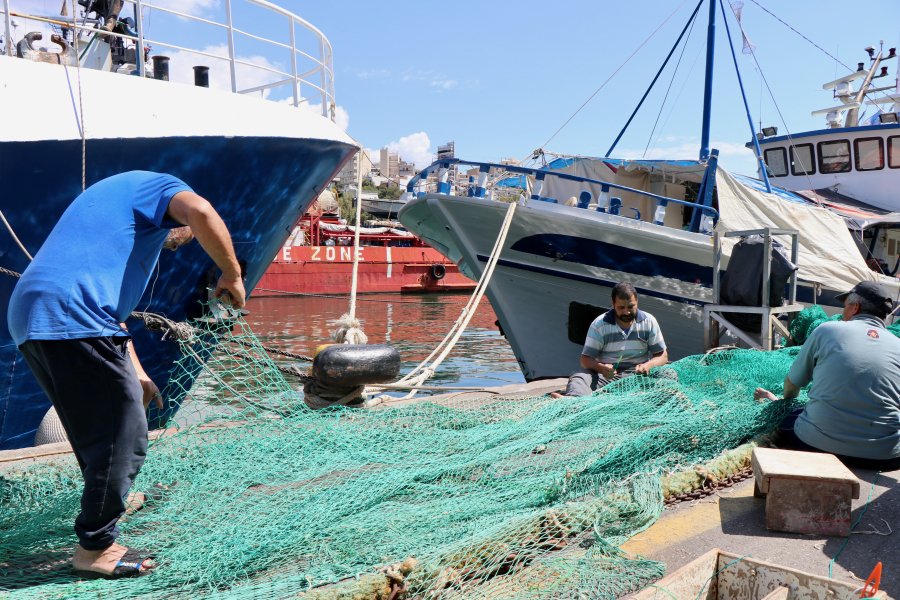
Fishermen from Kalymnos have lodged a strong protest over the repeated involvement of commercial fishing vessels in migrant search-and-rescue operations, in a letter addressed to Greece’s Ministry of Maritime Affairs and Insular Policy.
According to the fishermen, the sharp increase in migration flows from North Africa has resulted in their members repeatedly receiving instructions from Greece’s Joint Rescue Coordination Centre (EKSED) to interrupt their fishing activities and assist in Search and Rescue (SAR) operations.
They state that, in some cases, fishing crews are instructed to recover and bring dozens of people aboard their vessels—sometimes more than 50 to 70 individuals—effectively turning commercial fishing boats into rescue and passenger-transport vessels.
“Fishermen and rescued passengers are being placed at risk”
The fishermen cite Article 98 of the United Nations Convention on the Law of the Sea (UNCLOS), as well as Chapter V, Regulation 33 of the SOLAS Convention.
They point out that the obligation to assist people in distress at sea applies on the condition that the vessel itself, its crew and those already on board are not placed in serious danger.
According to their letter, fishing vessels do not carry adequate life-saving equipment for such large numbers of additional passengers and are not designed to accommodate dozens of people on open decks.
Taking 50 or 70 people aboard a fishing vessel, they warn, may place both the fishermen and those rescued in immediate danger.
Fishermen allege transfer of state responsibility
The letter also raises what the fishermen describe as an “unacceptable transfer of state and European responsibility.”
They stress that both the Hellenic Coast Guard and Frontex are funded and equipped with specialised offshore vessels and trained crews for such missions.
In the fishermen’s stated legal view, the repeated use of their boats for rescue and transport operations amounts to the de facto requisitioning of private services and assets without an adequate legal basis.
Heavy financial losses with no compensation
The fishermen also highlight the serious financial consequences of each rescue operation. They say they face:
- the loss of entire fishing trips,
- the destruction of catches already collected,
- substantial additional fuel costs,
- damage to sensitive fishing equipment,
- lost wages for crew members.
According to the letter, there is currently no state mechanism covering these expenses or compensating fishermen for their losses.
Call for Coast Guard and Frontex vessels—and a compensation scheme
The fishermen strongly object to what they describe as the de facto conversion of their boats into a permanent rescue fleet.
They clarify that they will assist with monitoring incidents involving people in distress. However, they state that they reserve the right to refuse to take people aboard when doing so would exceed the vessel’s safety limits and endanger the lives of passengers and crew.
They are calling on the competent ministries:
- to deploy sufficient Hellenic Coast Guard and Frontex operational vessels in the waters south of Crete;
- to immediately establish a dedicated compensation mechanism covering fuel costs, damage and loss of income for fishermen involved in SAR incidents following instructions from EKSED.
The letter brings to the forefront a serious issue at the intersection of saving lives, maritime safety and the economic survival of professional fishermen. Kalymnos fishermen are asking the state to assume its operational and financial responsibilities without placing a disproportionate burden on commercial vessels that were neither built nor equipped to conduct large-scale rescue operations.