
By Giannis Th. Patellis
August in the Aegean—August on Kalymnos—is a generous month. It is as though summer, slowly drawing towards its end and the coming of autumn, has deliberately endowed it with extra gifts, perhaps to reward those who choose it for their holidays.
And what does it not offer us each year? Sun-filled days, glowing beneath the crystal brilliance of the Aegean sun. Refreshing intervals when the weather grows playful and the roaring meltemi wind sweeps across the tranquil summer seas. Grapes, figs and prickly pears, ripe and tempting; countless pleasures and new encounters on the cool beaches of carefree summer days and in the picturesque tavernas of our nocturnal wanderings. And then there is the moon—the blue full moon of August—said, with good reason, to give us the brightest, most poetic and romantic night of the year.
As though wishing to express our gratitude for all the joys that August so generously bestows upon us, since ancient times we have dedicated to it the greatest feast of summer: the Dormition of the Most Holy Theotokos, widely known as the “Easter of Summer.”
Indeed, the tradition of our Church regards this feast as a day of joy, because the Dormition of the Virgin Mary is not an ending, but a new beginning—Her “Translation” into another world, everlasting and eternal.
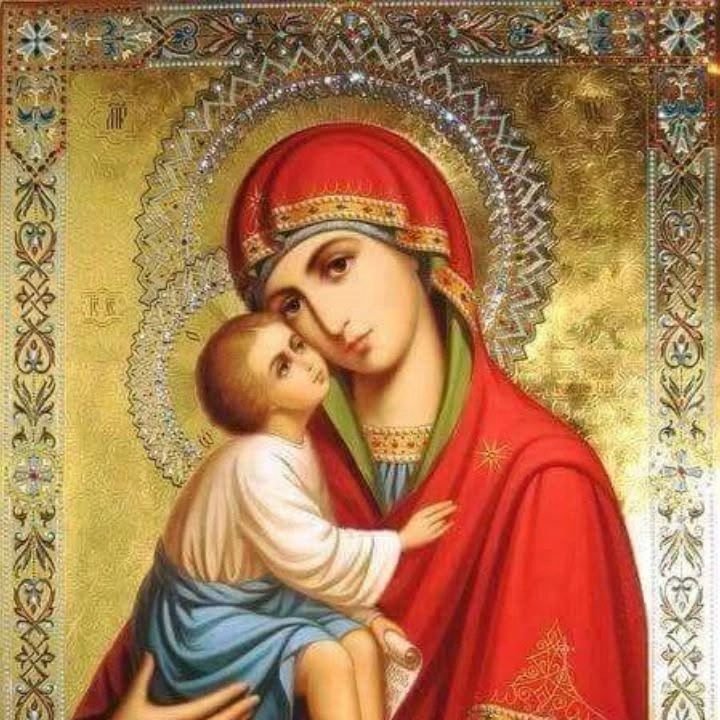
Thousands of churches throughout the world, wherever a Christian community exists, celebrate this great feast. Yet every people and every place lends it its own distinctive character. At the eastern edge of Asia, there are depictions of the Virgin with Asian features; in Africa, there are Black Madonnas; in Western Europe, the celebrated Madonnas of the Renaissance; and in our homeland, the renowned Panagias of Byzantine art. However different they may appear, they all share many common features. They are beautiful, gentle and tender, symbolising the Mother who is always ready to embrace, forgive, comfort and help.
The names attributed to the Virgin Mary are countless. Depending on how She is depicted in iconography, She is called Vrefokratousa—She Who Holds the Infant—Thrinousa, the Mourning Mother, or Glykofilousa, the Sweet-Kissing Mother.
She is also named after the place where Her miraculous icon was found: Spiliani, Hozoviotissa, Portaitissa, Ekatontapyliani. On our own island, She is known as Panagia of Tsikchoua, or Kecharitomeni of Chorio; Kyra Psili, Kyra Hosti, Pserimiotissa, Grafiotissa, Myrtiotissa, Galatiani, Panagia of Telendos and Panagia of Kastro.
Yet, if we wished to give one shared name to all the Panagias adorning every corner of our island, perhaps the most fitting would be “the Panagias of Nostalgia.”
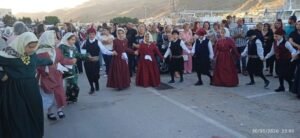
During these radiant days of the Feast of the Dormition, there is not a Kalymnian anywhere in the world who does not long to attend the celebration of the Virgin Mary in their old neighbourhood.
A secret voice calls them beneath the brightly decorated domes of Panagia Kecharitomeni of Tsikchoua, among beloved faces and the sacred shadows of their ancestors. They dream of climbing the slopes towards Kyra Psili in Vathy under the scorching afternoon sun, refreshed by the cool breeze blowing from the Bay of Pezonta.
They long to breathe in the intense fragrance of thyme and hear the buzzing of the bee searching for the season’s final nectar along the rugged ascent to Galatiani. They remember the years of their youth and the bustling festivals of Pserimiotissa and Panagia of Telendos.
All these small joys are what distant worlds—worlds from which we come and to which we still belong—have left behind in their passing. They are our response to the secret voices rising from the depths of our ancestral tradition.
They are the incurable nostos, the deep yearning to return home, which drives the Kalymnian emigrant to book a flight to the August homeland during the frozen January days of North America or the heat of February in the Australian summer.
This year, after almost three years of the pandemic and travel restrictions, summertime Kalymnos once again welcomes many of its children from abroad—those whom life’s hardships, whether recently or long ago, drove to other places and distant countries in search of a better future.
The island’s many Panagias—the “Panagias of Nostalgia”—await them with open, motherly arms, ready to shelter them beneath their grace.
And they will always be waiting.
August 2023
P.S. An older post, but one that, I believe, remains timeless… G. P.
Source: Facebook